
Know the air in your home. Before it becomes a problem.
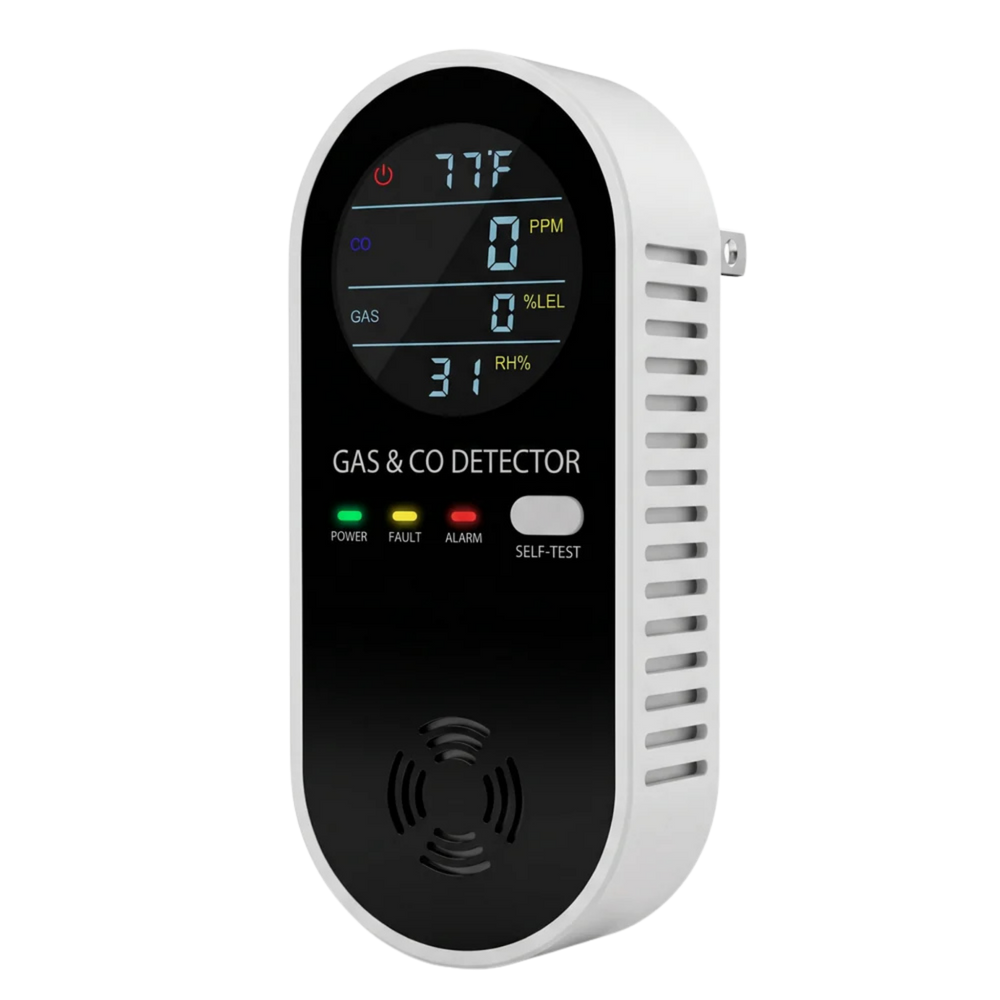
AirGuard is a plug-in CO, natural gas & propane detector with a live digital display — so you see the exact level in parts-per-million, not just a beep when it's already an emergency.
Carbon monoxide won't warn you. And your old detector probably won't either.
CO is invisible, odorless, and heavier symptoms mimic the flu. The detectors most families rely on are legally required to stay silent until levels are already dangerous — and their sensors quietly expire after 5–7 years.
Unintentional, non-fire CO poisoning kills over 420 Americans every year — most of whom had a detector installed.
Over 100,000 people end up in emergency rooms annually from CO exposure, with thousands requiring hospitalization.
By UL standard, most detectors don't alarm until 70 PPM has been present for 1–4 hours. Symptoms start at 30 PPM.
Sources: CDC Morbidity and Mortality Weekly Report · UL 2034 Standard for Single and Multiple Station Carbon Monoxide Alarms
A detector that actually tells you the number.
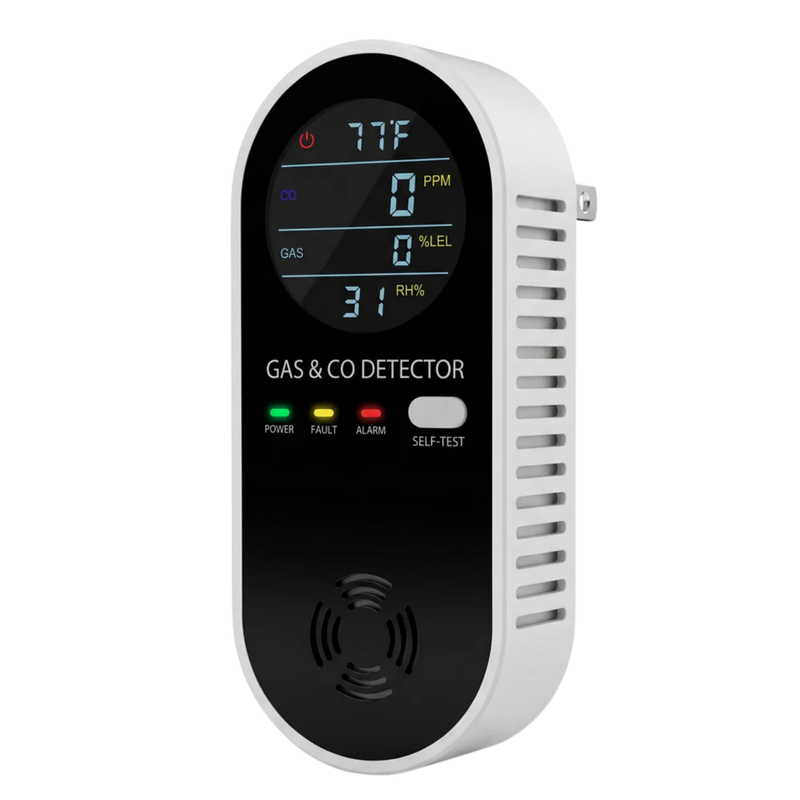
AirGuard uses the same electrochemical CO sensor class used in industrial safety meters and pairs it with a live digital display — so you see what's in your air in real time, not just when the siren screams at 2 AM.
-
✓
Live PPM display, not just an alarm
See exact CO and combustible gas levels any time you glance at it. Early awareness starting at 10 PPM.
-
✓
Detects CO, natural gas & propane
Three sensors in one plug. Most household detectors only cover CO — AirGuard also catches methane leaks (LEL) from stoves, furnaces and gas lines.
-
✓
30-second install. No ladder, no wiring.
Plugs directly into a standard 120V outlet at breathing height, where CO and gas actually accumulate.
-
✓
Sensor-life indicator
Tells you when the sensor is actually near end-of-life — instead of quietly failing behind a green light.
Protecting your family takes 30 seconds.
Plug it in
Any standard outlet — ideally in bedrooms, hallways, near furnaces and any sleeping areas. One unit protects roughly 1,000 sq ft.
Watch the display
A healthy home reads 0 PPM. Any rise is visible on the screen instantly — long before levels are dangerous.
Sleep easier
85 dB alarm + flashing red LED if CO exceeds safe thresholds. Quiet LED self-tests every 60 seconds in the background.
AirGuard vs. a standard CO alarm.
Only one tells you what's actually happening before it alarms.
Standard alarms do their job — but by UL 2034, they are not required to warn you at sub-dangerous levels. AirGuard adds visibility on top of that baseline.

"I built AirGuard because my own detector failed."
In 2022, a loose connection on our water heater leaked CO into our basement for three weeks. Our ten-year-old detector — green light on, beep-when-tested — never made a sound. My wife noticed our dog acting strange and called a plumber. Only then did we learn how close we'd been.
I'm a mechanical engineer. I spent a year working with the same sensor suppliers that industrial safety companies use, and we built AirGuard around one idea: you shouldn't have to guess whether your detector is working. You should be able to see it.
— Mark Ellison
Founder, Primo Goods · Austin, TX
2,147 verified reviews. 94% five stars.

"Caught 47 PPM our old detector missed"
We had a detector on the ceiling for six years — green light, beeped when tested. Plugged in AirGuard as a second line of defense. First night: 47 PPM in my son's bedroom. Turned out to be a slow flue leak. The old one never once made a sound. This thing probably saved him.

"Bought five — one for each kid's home"
Three adult children, two grandkids' houses, one for my own. Cheapest peace-of-mind I've ever spent money on. Setup took less than a minute per unit. My daughter called me the next week to say hers was already reading 8 PPM near her gas stove — she got it serviced.

"I look at the display and I know"
When the grandkids come over for the weekend I used to get anxious — my old detector was 12 years old. Now I just glance at the little screen. It says zero. I know. That's what I was paying for and didn't realize it.

"Found a cracked flue pipe"
Had First Alert detectors in every room. AirGuard showed 29 PPM one evening — the First Alerts were silent. HVAC tech came out next day: cracked flue pipe on the furnace. Four kids in this house. I don't know how else we would have caught it before winter.

"Sent one to my 74-year-old mom"
Mom lives alone. Her detector was twelve years old — still had a green light, but the sensor was toast. AirGuard was something she could install herself in ten seconds. I don't lie awake at 2 AM anymore wondering if she's okay.

"Does what it says"
No nonsense. Plugs in, shows the number. Alarm tone is loud — I tested it by holding a lit match near it and it picked up the combustion. I deducted one star only because the display is a little bright in a dark bedroom. Otherwise, exactly what I wanted.
Most homes need 2–4 detectors.
Experts recommend one CO detector per sleeping area plus one near the main gas appliances. Bundle and save.
1 AirGuard
- ✓ Free US shipping
- ✓ 100-day returns
- ✓ 2-year warranty
- ✓ Ships within 24 hours
4-Pack
- ✓ Free US shipping
- ✓ 100-day returns
- ✓ 2-year warranty
- ✓ Free placement guide
- ✓ Ships within 24 hours
8-Pack
- ✓ Free US shipping
- ✓ 100-day returns
- ✓ 2-year warranty
- ✓ Free placement guide
- ✓ Priority phone support
Try AirGuard for 100 nights.
If you don't feel calmer knowing exactly what's in your air — send it back for a full refund. No restocking fees, no shipping fees, no questions. Keep it 100 days, use it every night. If it doesn't earn its place in your home, we'll make it right.
What homeowners ask us.
How is AirGuard different from the detector I already own?
Two things. First, your current detector is legally required to stay silent until CO levels are already dangerous — typically 70 PPM for 1–4 hours. AirGuard shows you the live number starting at 0 PPM, so you see exposure building long before the alarm threshold. Second, AirGuard detects natural gas and propane in addition to CO, which most household detectors don't.
Will it false-alarm when I cook?
No. AirGuard's sensors are calibrated specifically for CO (from incomplete combustion) and methane/propane (leaks from gas lines). Steam, smoke from burning toast, and cooking vapors don't trigger it. Live PPM readings may briefly nudge during gas-stove use, which is normal and expected — the alarm only triggers at genuinely dangerous thresholds.
Is it hard to install?
It takes about 30 seconds. Plug it into any standard 120V outlet at waist-to-chest height (where gas and CO actually concentrate). No tools, no ladder, no wiring, no app required. It begins monitoring the moment it powers on.
How many do I need?
The NFPA recommends one CO alarm on every floor, including one near each sleeping area. For most homes that's 2–4 units. Our 4-pack covers a typical 3-bedroom home. Bundle pricing reflects that most buyers want full coverage.
Does it replace my hard-wired CO alarm?
Many customers use it alongside their existing hard-wired alarm as a second layer of protection with visible readings.
How long does the sensor last?
The electrochemical CO sensor has a rated life of 7+ years. Unlike most detectors, AirGuard will actively warn you when the sensor is approaching end-of-life — it won't quietly fail behind a green LED.
What if it doesn't work for me?
Return it within 100 days for a full refund. We cover return shipping. No restocking fee. If it fails within the 2-year warranty period, we replace it free.
See the number. Every night.
Join 40,000+ families who swapped "beep when something's wrong" for "glance and know."