
Firefighter Warns: This Summer, 4 in 10 Vacation Rentals Won’t Have a Working Carbon Monoxide Detector. Yours Could Be One of Them.
You can’t see it. You can’t smell it. And by the time your children feel it — they can no longer get out of bed.

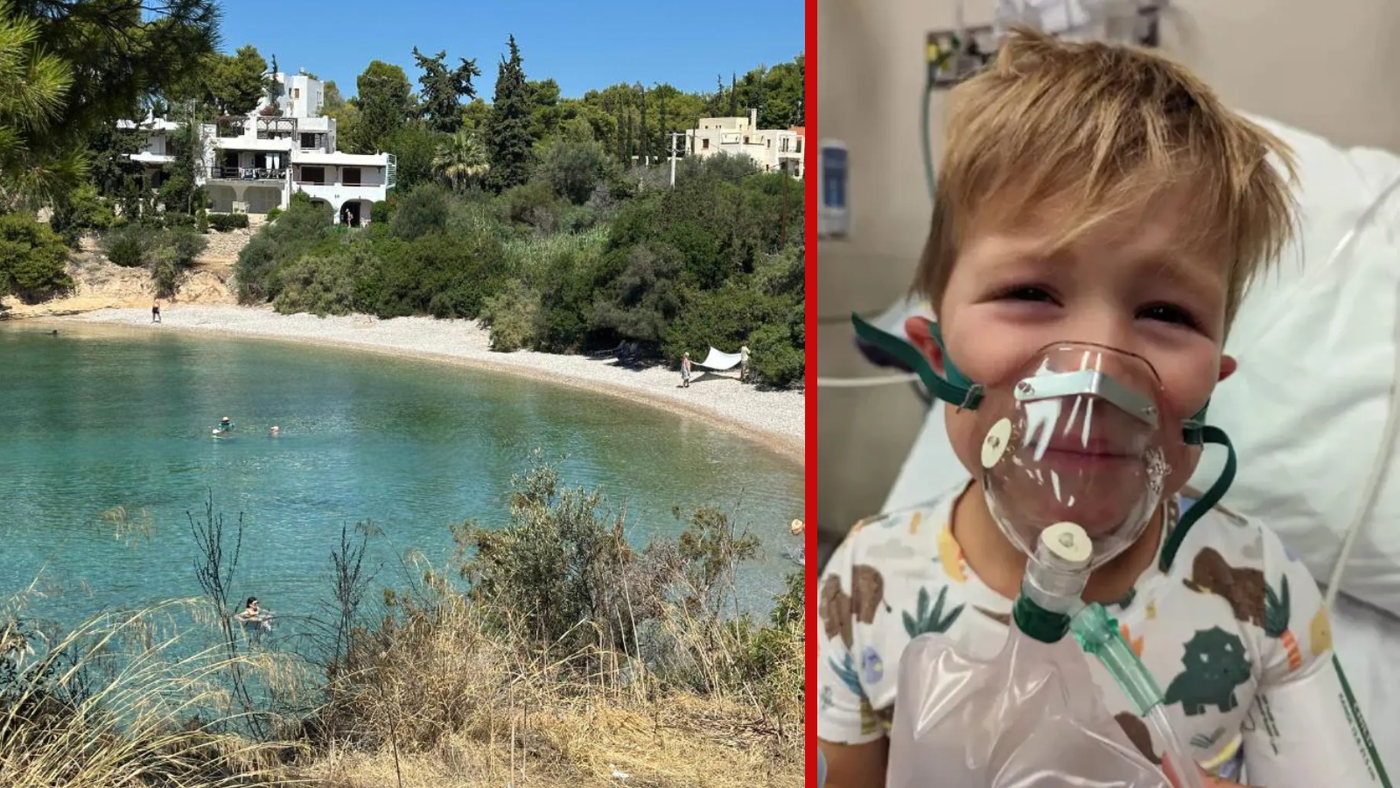
You found the perfect rental. Five stars. Beautiful photos. The kids are already excited.
You checked the reviews. You compared the cleaning fees. You read the cancellation policy.
But you didn’t check the one thing that could kill your entire family in their sleep tonight.
Whether the carbon monoxide detector in that rental actually works.
Not whether the listing says it has one. Whether the battery is alive. Whether the sensor hasn’t expired. Whether it’s even mounted on the wall anymore — or sitting in a kitchen drawer because a previous guest got annoyed by a low-battery chirp and pulled it down.
Nobody checked. Not the owner. Not Airbnb. Not VRBO. And not you — because nobody told you to.
That’s about to change.
It Doesn’t Smell. It Doesn’t Burn. It Just Fills the Room While You Sleep.
Carbon monoxide is not like a gas leak. There’s no rotten egg smell. No hissing pipe. No warning your body can detect.
It enters your lungs the same way oxygen does. Except it’s not oxygen. It latches onto your blood cells and replaces the oxygen your brain needs to stay alive. Molecule by molecule. Breath by breath.
The first thing you feel is tired. Not scared. Not sick. Tired. Like you want to sleep a little longer. So you do.
Your breathing gets shallow. Your blood oxygen drops. If you’re awake, you might get a headache and think you’re coming down with something. If you’re asleep — and most families are when it happens — you lose consciousness before you ever open your eyes.
No coughing. No alarm in your body. Nothing that says get up, get out.
You just don’t wake up.
That’s what carbon monoxide does. And it kills over 400 Americans every year. Another 100,000 end up in the emergency room — many of them thinking they just had the flu.
The Place You’re Booking Has No One Looking Out for You
When you book a hotel, there’s a front desk. A maintenance staff. Fire inspections. Someone, somewhere, is at least theoretically responsible for the building you’re sleeping in.
When you book a vacation rental — a cabin, an Airbnb, a beach house — there is nobody.
There is no federal law requiring a CO detector in vacation rentals. Only 14 states require them in hotels, and most of those laws have loopholes wide enough to drive a fire truck through. Vacation rentals often don’t even fall under hotel regulations.
Airbnb promised in 2014 to require CO detectors in every listing. A decade later, only 2.3% of their 7 million properties received one through their program. The CEO called enforcing it “very hard.”
Very hard.
Meanwhile, 40% of Airbnb listings in the U.S. don’t even claim to have a CO detector on the property. And the ones that do? Nobody inspects. Nobody verifies. A checkmark on a listing page is not a safety system. It’s a checkbox.
The gas water heater in the utility closet runs all summer. Every time a guest takes a hot shower, it fires. If the vent pipe is cracked — and after five, ten, fifteen years of no maintenance, many of them are — carbon monoxide leaks into the house.
Not a lot. Not at first. Maybe 15 parts per million. Then 25. Then 40.
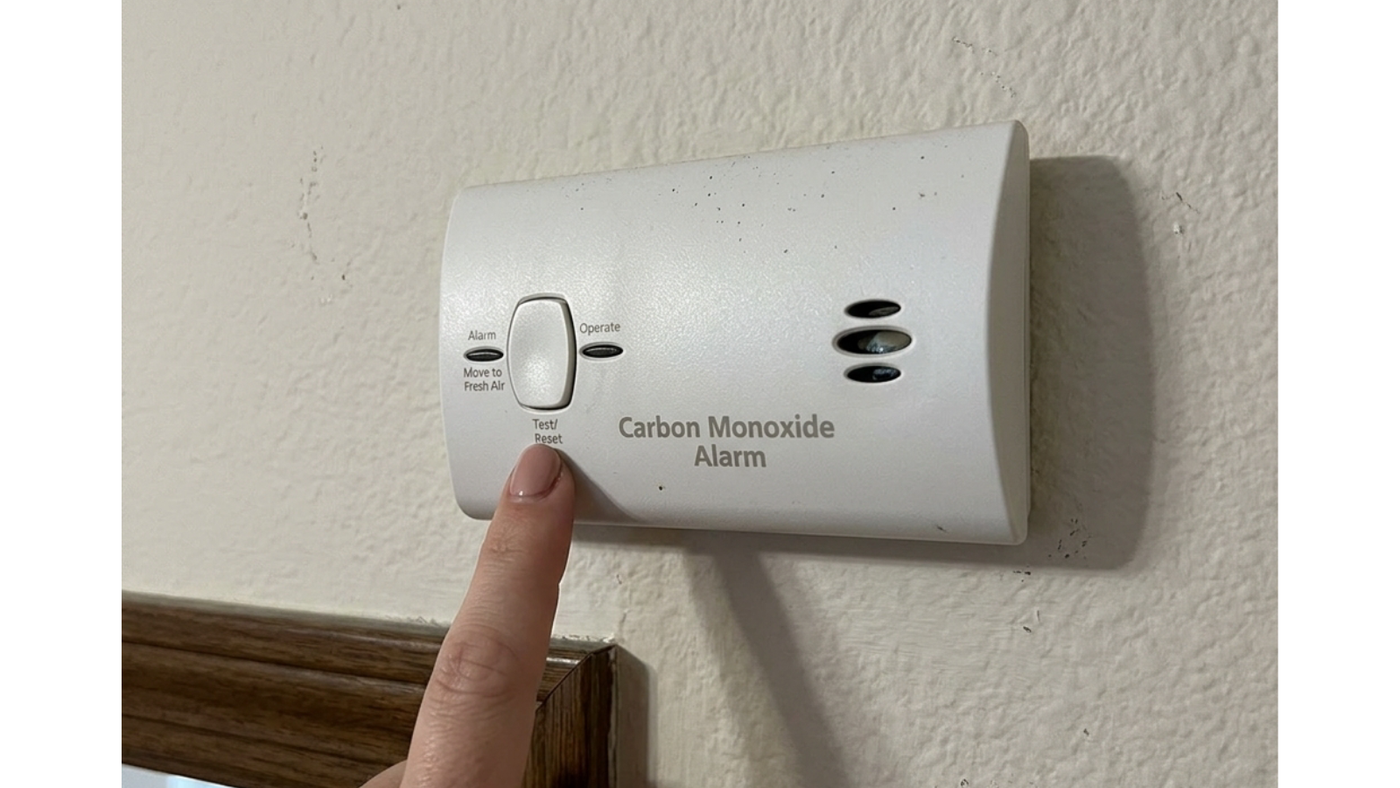
That detector on the wall — if it even has a battery — is legally allowed to stay silent until 70 PPM. For up to four hours.
By then, your child has been breathing poison for the entire night.
These Families Thought They Were Safe Too
Every single one of these families did what you’re doing right now. They booked a nice place. They trusted the listing. They went to sleep.
Between 1999 and 2020, firefighters responded to over 4,000 carbon monoxide incidents at hotels, motels, and resorts in the U.S. alone. More than 1,000 people were hurt. Dozens died.
And those are just the ones that made it into a report. Carbon monoxide poisoning is not a reportable condition. There is no national database. If a family gets headaches and nausea on vacation and drives home thinking they had a stomach bug — nobody ever counts them.
Every summer I respond to a couple of these calls. Some families get lucky — headaches, nausea, a hospital visit. Some don’t. The ones that don’t all look the same. Quiet house. Doors locked. No answer when we knock. You already know what you’re walking into before you force the door.
Nobody knows the real number. That should terrify you.
A Sleeping Child Absorbs CO Faster Than You Do. And They Can’t Get Themselves Out.
Children breathe faster. Their lungs pull in more air relative to their body size. Their blood absorbs carbon monoxide faster than an adult’s.
At the same CO level that gives you a dull headache you might sleep through — your child’s brain is already being starved of oxygen.
They don’t wake up coughing. They don’t cry. They don’t call out for you. Carbon monoxide doesn’t work that way. It feels like warmth. Like deep sleep. Like wanting to stay in bed a little longer.
And then they can’t get up even if they wanted to.
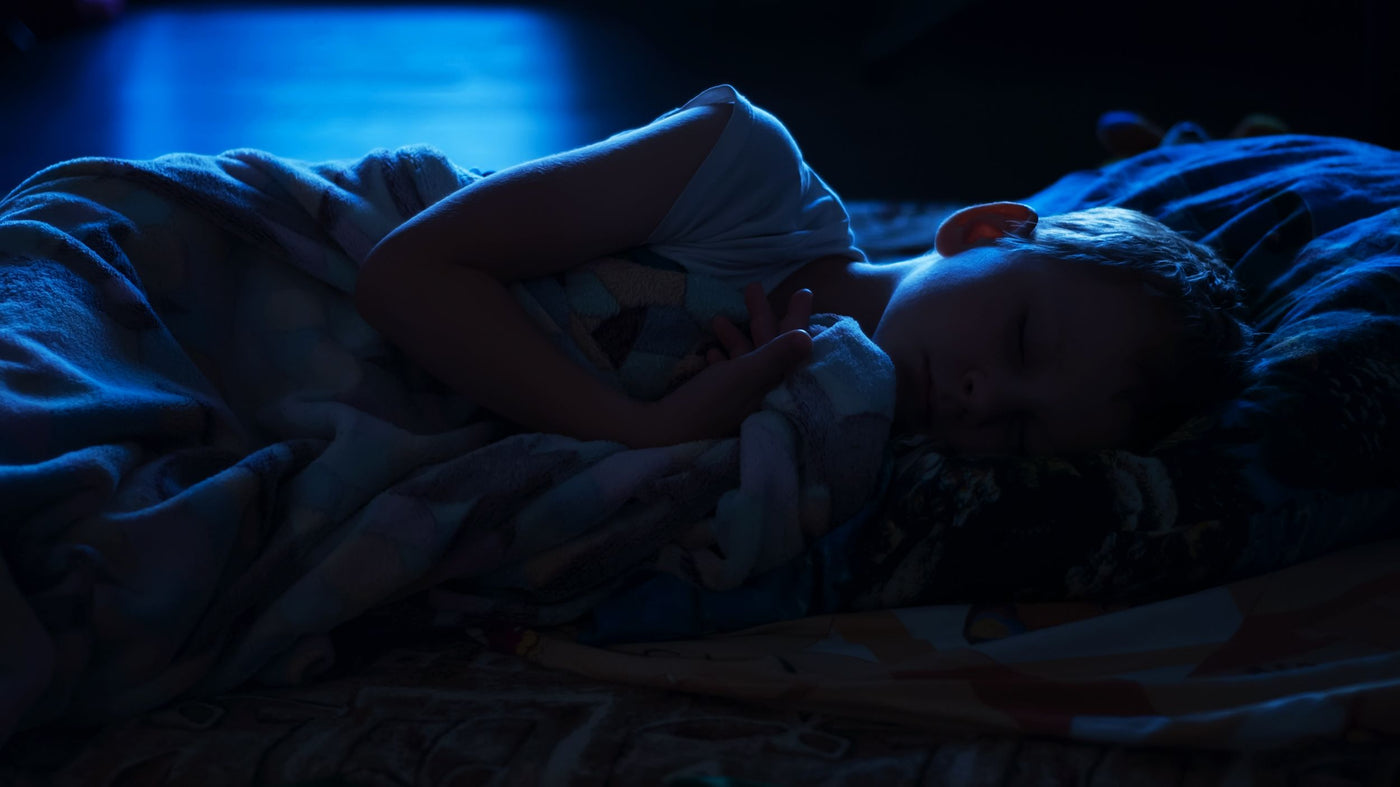
The children who survive often come home different. Brain damage from CO poisoning can take months to fully appear. Memory loss. Trouble reading. Behavioral changes doctors can’t fully explain. A kid who was two grades ahead is now struggling to keep up.
Every year, over 100,000 Americans end up in the emergency room from carbon monoxide poisoning. Many of them are children. Many of them thought they just had the flu. And because CO poisoning is not a reportable condition, there is no national count of how many happened in vacation rentals.
Nobody is tracking it. Nobody is protecting your children in that rental.
Except you.
They Don’t Trust the Rental. They Bring Their Own.
Every firefighter knows what UL 2034 means. Every firefighter knows what a cracked heat exchanger smells like — which is nothing. Every firefighter has walked into a house and found a family that didn’t wake up.
So when firefighters travel with their own families, they don’t check the listing to see if there’s a detector. They don’t press the test button on the wall. They don’t hope.
They bring their own. Every single time.
A portable CO detector with a digital screen. Not a green light that sits there doing nothing. A number. A number you can see the moment you walk past it. Zero means you’re safe. Anything above zero means you caught it — early — while you still have time to open windows, grab your kids, and get out.
Not four hours from now. Right now.
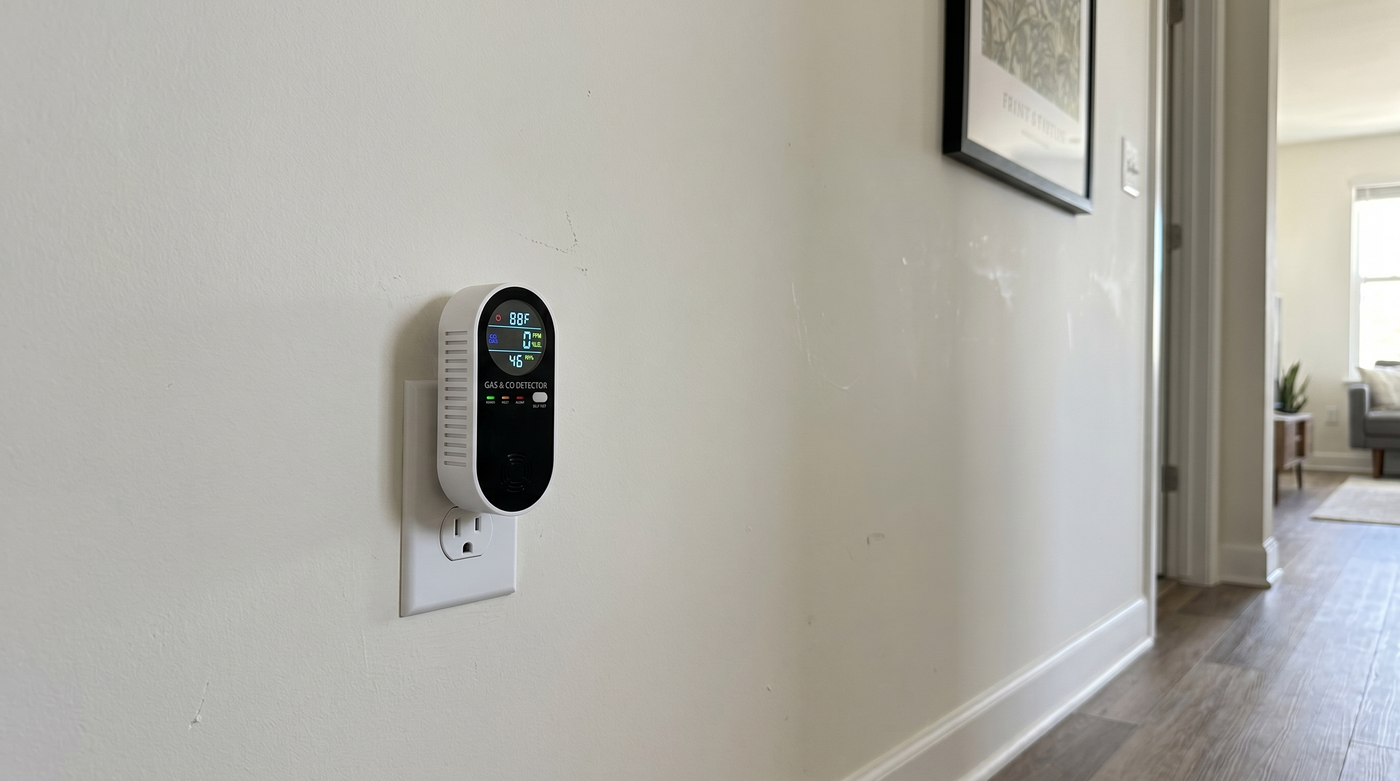
That’s the difference. The detector on the wall waits. A portable monitor with a screen tells you the second something is wrong.
At 10 PPM, you’re calling the property manager.
At 10 PPM, you’re opening windows.
At 10 PPM, your kids are still breathing clean air.
At 70 PPM — the level where the wall detector is finally allowed to beep — you’re calling 911.
The question is which number you want to find out at.
The AirGuard CO & Gas Detector
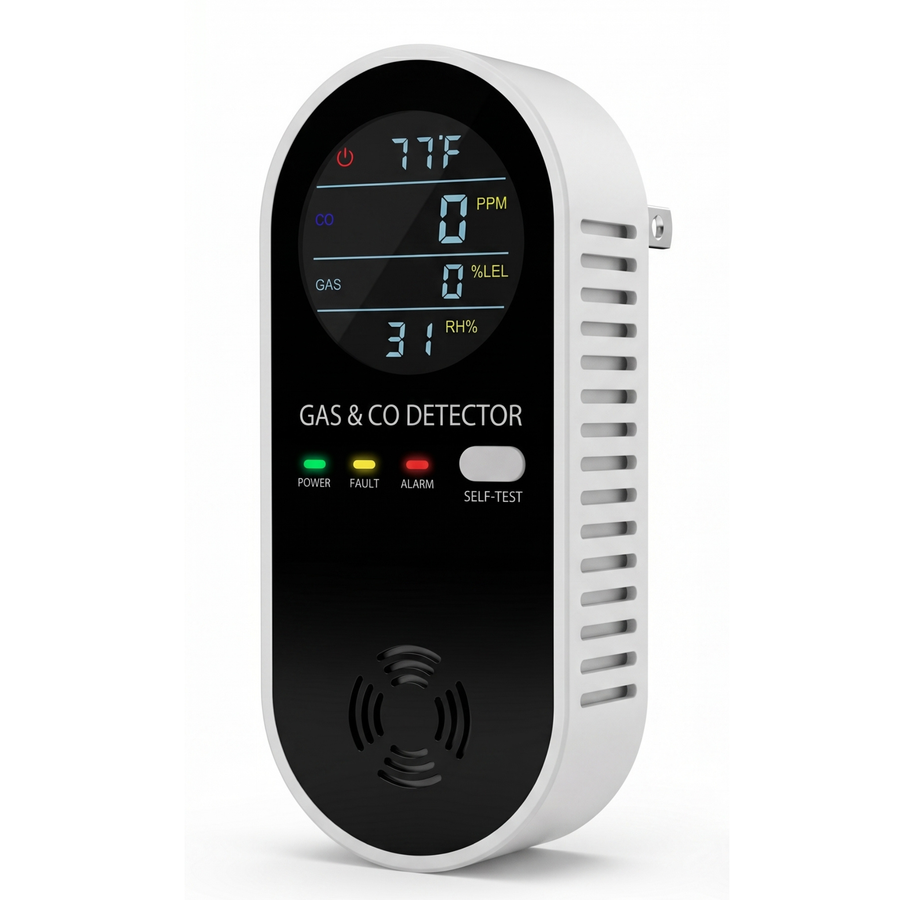
Digital display. Alerts at 10 PPM — not 70. Plugs into any outlet. No battery to die. No sensor to silently expire. The detector firefighters carry for their own families.
See the AirGuard →Pack it before your next trip. Plug it in the first night. Check the number.
This page is a paid advertisement for AirGuard by Primo Goods.