
Firefighter Warns: Your AC Could Be Spreading Carbon Monoxide Through Every Room in Your House Right Now. Your Detector Won’t Tell You.
Your AC could be pulling carbon monoxide into every room — and your detector won’t catch it.

Most people think carbon monoxide is a winter problem. Furnaces. Old heaters. Cold weather.
I did too. Then I started paying attention to the calls we get in June, July, and August.
They’re not less frequent. They’re just harder to explain.
A dad calls 911 because his daughter collapsed in the hallway. She’s conscious but can’t stand up. She’s been “off” for weeks — headaches, fatigue, vomiting before school. The pediatrician said migraines. Then she hits the floor.
We show up. We pull out the meter. And there it is.
32 PPM in the living room. 45 in the hallway. 38 in the kids’ bedroom.
Not high enough to set off any alarm. Not high enough for anyone to pass out. But high enough to make an entire family sick for weeks without knowing why.
Every summer I respond to a handful of these calls. Every single one has a working CO detector on the wall.
Green light on. Silent. Doing exactly what it was designed to do.
Which is nothing.
Your AC Doesn’t Bring In Fresh Air. It Recirculates What’s Already Inside.
This is the part that changes everything once you understand it.
Your air conditioning system does not pull air from outside. It pulls air from inside your house through the return vents, cools it, and pushes it back out through the supply vents.
The same air. Over and over. A completely closed loop.
Every 10 to 15 minutes, your AC cycles every cubic foot of air in your house through the system. Whatever is in that air goes everywhere — every bedroom, every hallway, every room your family sleeps in.
Now here’s where it gets dangerous.
Your gas water heater sits in a utility closet or basement. It fires dozens of times a day — more in summer, because everyone’s showering more, running more laundry, using more hot water.
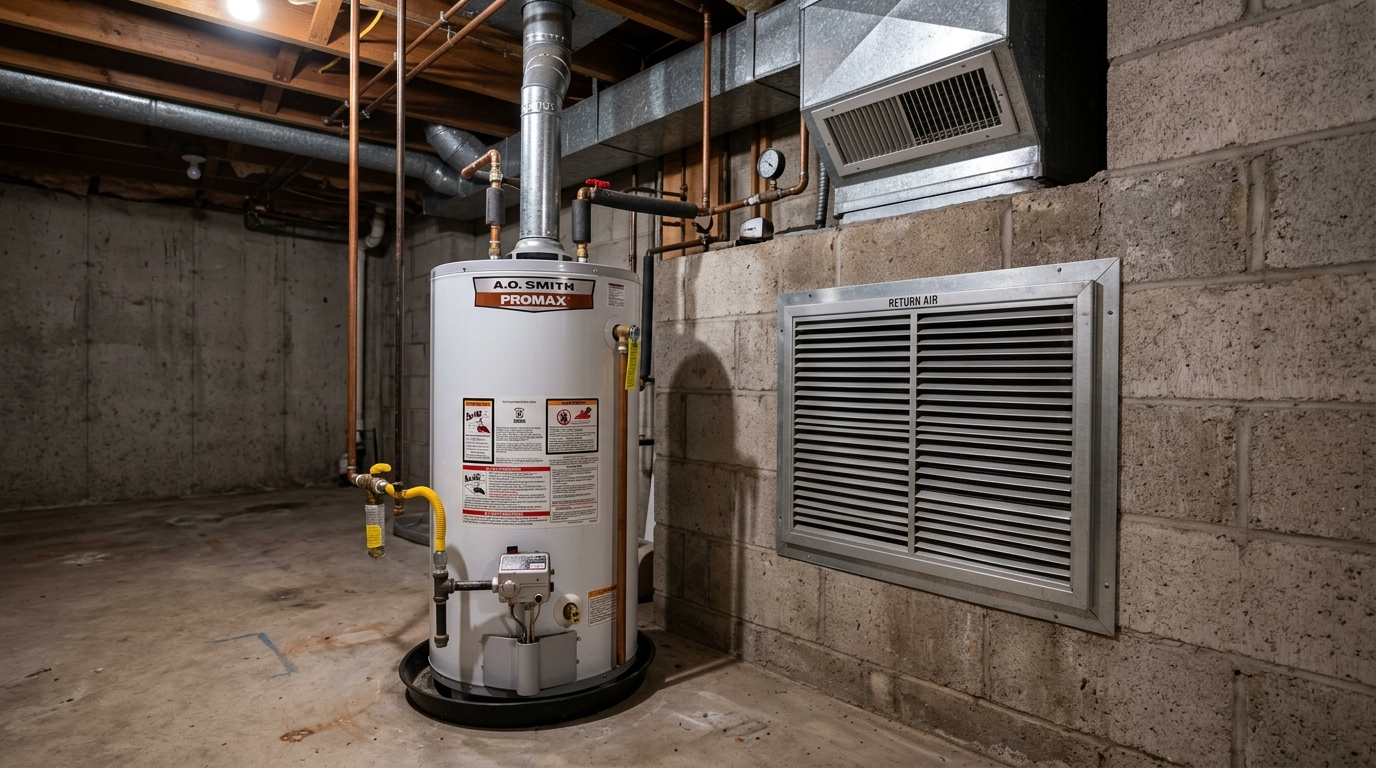
If the exhaust vent has even a small crack, a loose fitting, or a corroded joint — carbon monoxide leaks out every time it fires.
Your return air vent is usually nearby. Sometimes right next to it. Sometimes directly above it.
Your AC picks it up. And delivers it to every room in your house. Every 12 minutes. All day. All night.
The same thing happens with gas dryers, gas stoves with pilot lights, and attached garages where a car idles for a few minutes before pulling out.
In winter, you might open a window. You might have some airflow. In summer, your house is sealed tight. Every window closed. Every door shut. AC running 24/7.
You’ve created the perfect closed system for low-level carbon monoxide to build up and spread — and your detector is designed to ignore all of it.
Your Detector Is Legally Allowed to Stay Silent While Your Family Breathes Poison
Every CO detector sold at Home Depot, Walmart, Lowe’s, and Amazon is built to a standard called UL 2034.
Here’s what that standard actually says:
Four hours.
Your child has been breathing 70 parts per million of carbon monoxide for four hours before the thing on your wall is required to beep.
And below 70? It doesn’t have to make a sound. Not at 30. Not at 40. Not at 50. Not at 60.
But here’s what happens to your family at those levels:
Your detector stays silent through all of it.
Green light. Everything looks fine.
Your family gets sicker. Week after week. And nobody connects it to the air in their own house.
Your Kids Are Absorbing It Faster Than You Are. And They Can’t Tell You What’s Wrong.
Children breathe faster than adults. A 4-year-old takes almost twice as many breaths per minute as you do.
Their lungs are smaller. Their blood absorbs carbon monoxide at a higher rate relative to their body weight.
At the same CO level that gives you a dull headache you write off as stress — your child’s brain is already being starved of oxygen.
They don’t know what’s happening. They can’t tell you “something is wrong with the air.” They just feel tired. Or sick. Or they can’t focus at school. Or they get headaches every morning that nobody can explain.
You take them to the pediatrician. The doctor says it might be allergies. Or migraines. Or behavioral.
It’s not behavioral. It’s the air in your house.
And the detector on your wall — the one with the green light — will never tell you that. Because at 20, 30, 40 PPM, it’s not designed to.
Every year, over 100,000 Americans end up in the emergency room from carbon monoxide poisoning. Many of them — especially children — thought they just had the flu. Nobody ever checked the air.
I Walked Into a House Last May Where Every Room Read Between 35 and 52 PPM
Routine AC call. Different neighborhood. Nothing unusual.
I pulled out my meter at the front door — something I do on every call now.
Living room: 38 PPM.
I walked through the house before I even checked the system.
Every room between 35 and 52 PPM.
Family of five. Dad, mom, three kids. Eight, six, and four years old.
The six-year-old was on the couch in the middle of the afternoon. Blank expression. Wouldn’t look up when I walked in.
Her mom said quietly, “She’s been like that for weeks. Doctor thinks it might be behavioral.”
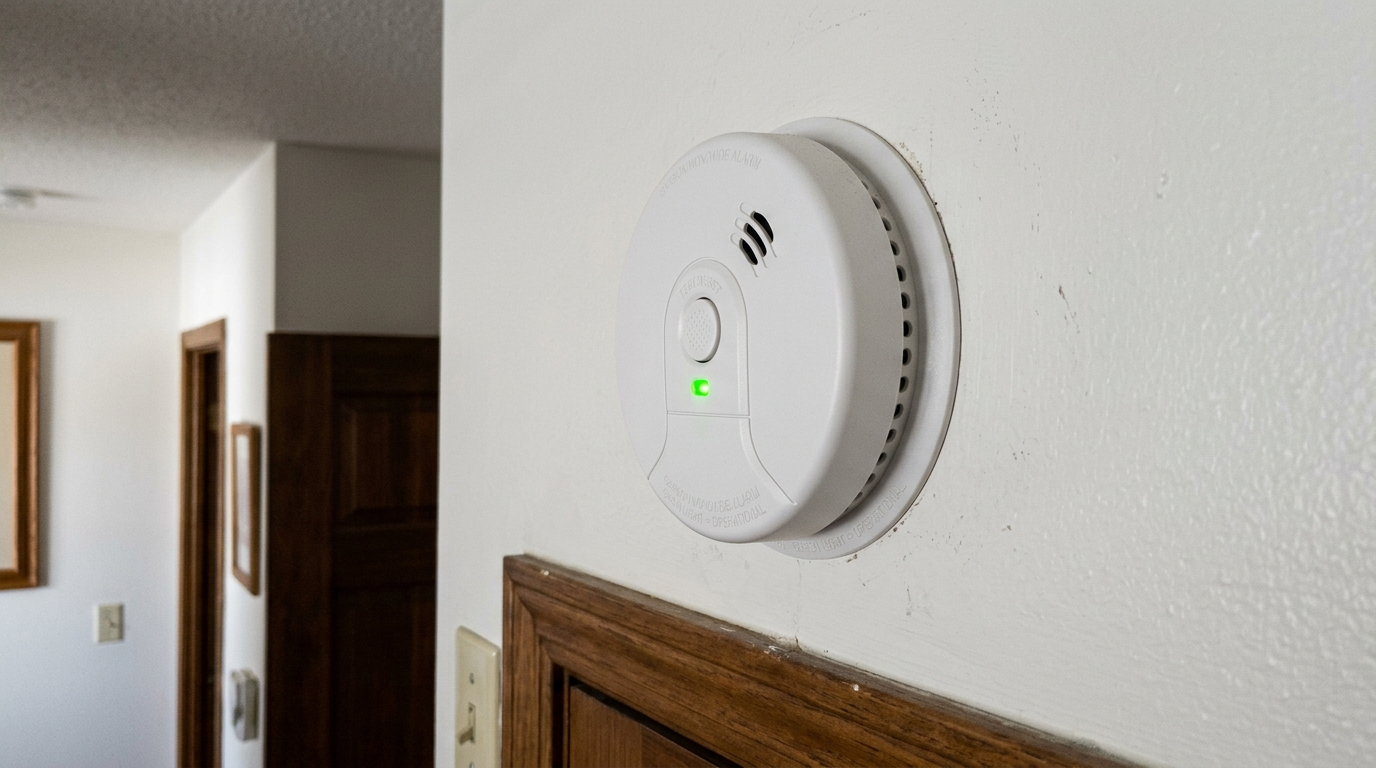
I showed her the meter. 47 PPM. Right next to the CO detector on the wall.
Green light glowing.
I held my meter next to it.
47 PPM. The detector was completely silent.
“This detector will not make a sound until you hit 70 PPM,” I told her. “You’re at 47. It sees nothing wrong.”
She looked at her daughter on the couch.
Then at the four-year-old on the floor in front of the vent.
She put her hand over her mouth.
“Since April,” she said.
The source was a gas dryer vent in the utility room, improperly connected. Return air intake directly above it. Every drying cycle. Every AC cycle. Straight into every room in the house.
Since the first warm day in April.
Your AC Has Been Running Since Spring. What Has It Been Circulating?
Think about it.
Your AC turned on sometime in April or May. Every window closed. Every door shut. House sealed tight to keep the cool in.
Since then, your system has been pulling air from inside your house, cycling it through the return vents, and pushing it into every room. Every 12 minutes. All day. All night.
If your gas water heater has a small crack in the exhaust vent — and after 5, 10, 15 years, many of them do — CO has been leaking into that loop every time it fires.
If your gas dryer vent has a loose connection — CO enters the loop every time you run a load.
If your car idles in the attached garage for two minutes every morning — CO enters through the gap under the door and your AC picks it up.
At 25 PPM. 35 PPM. 50 PPM.
Levels your detector is designed by law to completely ignore.
But levels your family breathes. Continuously. Every 12 minutes. All day. All night.
Since April.
Have you had headaches this spring? Has your kid been tired? Has anyone in your family felt “off” and blamed the season?
What if it’s not the season?
You Need a Number. Not a Green Light.
The only way to know what’s in your air is to see the actual number.
Not a green light that means the power is on. Not a beep that only tests the speaker. A real PPM reading on a screen you can look at every time you walk past it.
If it says 0 — you’re safe. Actually safe. Not hoping safe.
If it says 6, or 10, or 14 — you caught it. Early. While your kids are still breathing clean air. While you have time to open a window, call an HVAC tech, and find the source.
Not four hours from now. Not at 70 PPM. Not in the back of an ambulance.
Right now. At a number that actually matters.
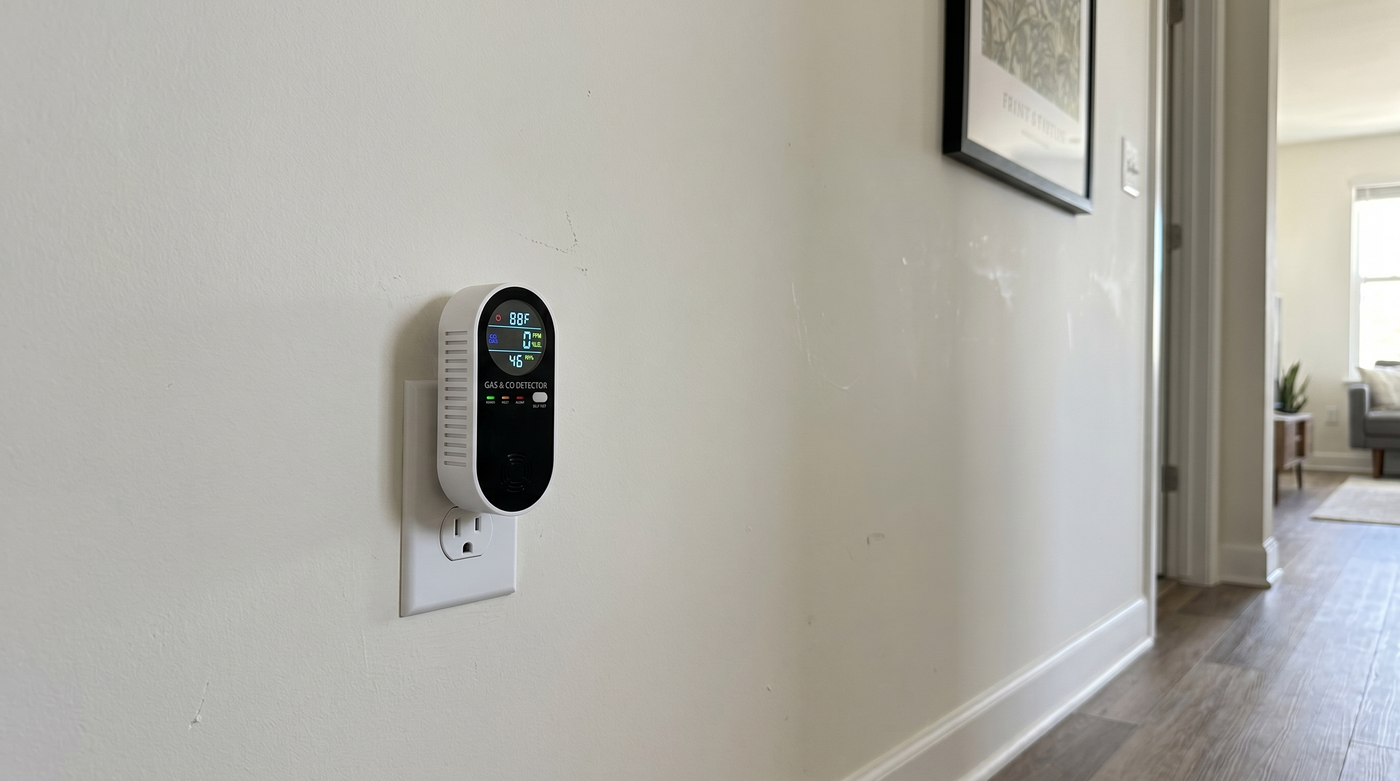
The AirGuard CO & Gas Detector
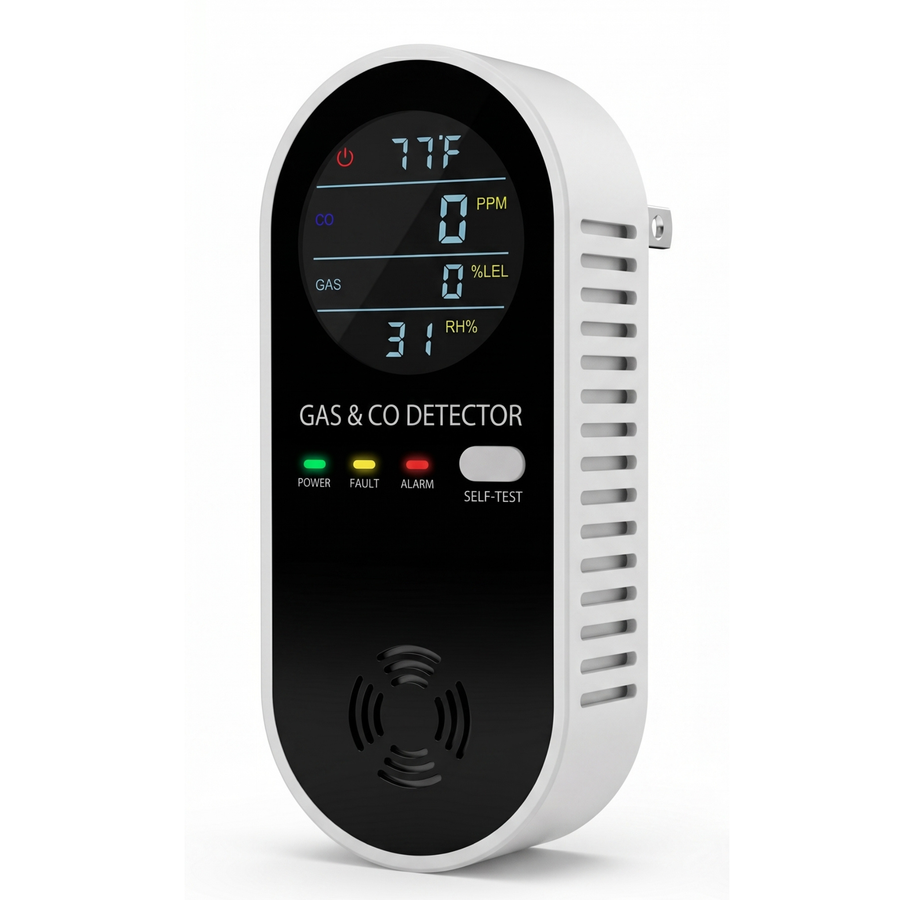
Digital display. Shows the actual PPM level in real time. Alerts at 10 PPM — not 70. Plugs into any outlet. No battery to die. No sensor to silently expire. The detector professionals use in their own homes.
See the AirGuard →Plug it in near your return vent. Check the number. Know what your AC has been circulating.
A green light isn’t protection. It’s permission to stop worrying.
And worrying is the only thing that would have saved that little girl on the couch.
This page is a paid advertisement for AirGuard by Primo Goods.