
Your RV Is 300 Square Feet. Carbon Monoxide Fills It in Minutes, Not Hours. And Your Factory Detector Is Probably Already Dead.
An RV technician with 16 years on the job explains why he refuses to trust factory CO detectors — and what he found behind your fridge that nobody told you about.

I’ve worked on RVs for 16 years. I need to tell you something that most RV techs won’t say out loud.
About half the rigs I service every summer could poison the people sleeping inside them. And the owners have no idea.
I run a service shop in Knoxville, Tennessee. I work on everything — Class A’s, Class C’s, fifth wheels, travel trailers. Old ones, new ones, cheap ones, expensive ones.
Every spring the same thing happens. Families bring their rigs in for a pre-season check. Oil the slides, test the AC, check the tires. The fun stuff.
Nobody asks me to check the CO situation. Almost nobody.
So I started doing it anyway.
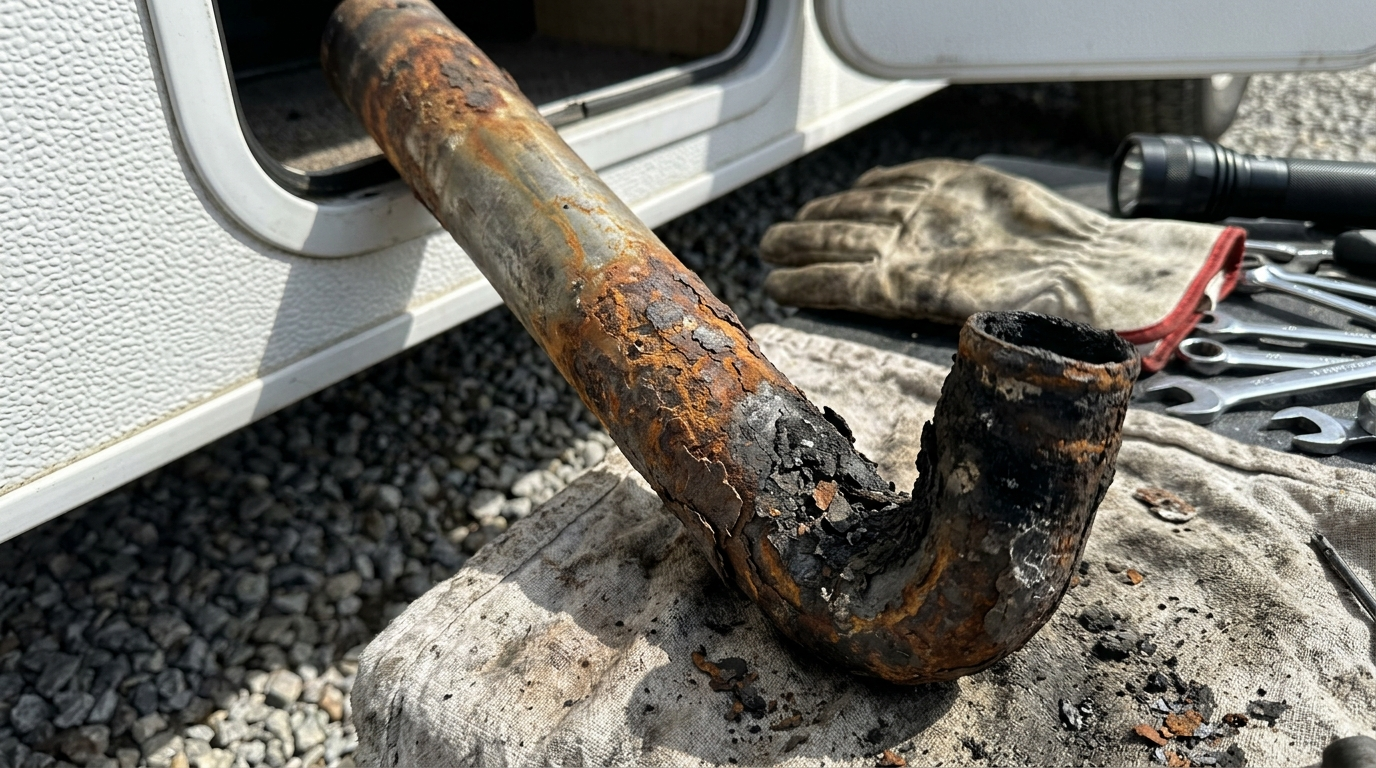
Rusted Flue Tubes. Corroded Vents. Cracked Burner Assemblies. In Half the Rigs That Roll Through My Shop.
Propane fridge flue tubes rusted through. Furnace exhaust vents separated at the joints. Corroded burner assemblies on water heaters. Cracked seals around the fridge vent on the outside wall.
Any one of those means carbon monoxide is venting directly into the cabin instead of outside.
I see it in rigs that are five years old. I see it in rigs that are fifteen years old. The older the rig, the worse it usually is.
This isn’t rare. This is most of them.
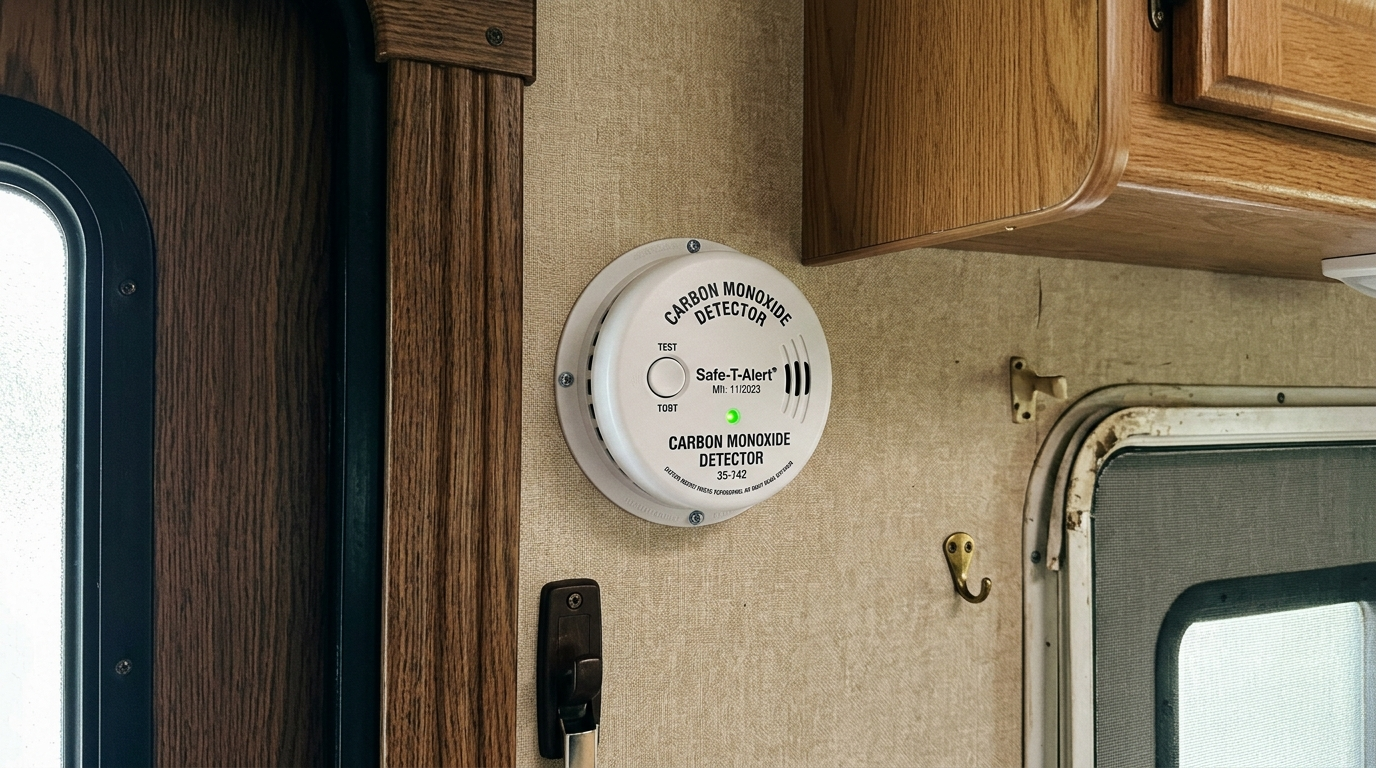
And every single one of these rigs has a little CO detector mounted near the floor with a green light on.
The owners point at it when I bring up the exhaust issue. “We’re covered,” they say.
No. You’re not.
I Started Pulling Them Off the Wall. 6 Out of 10 Have Dead Sensors.
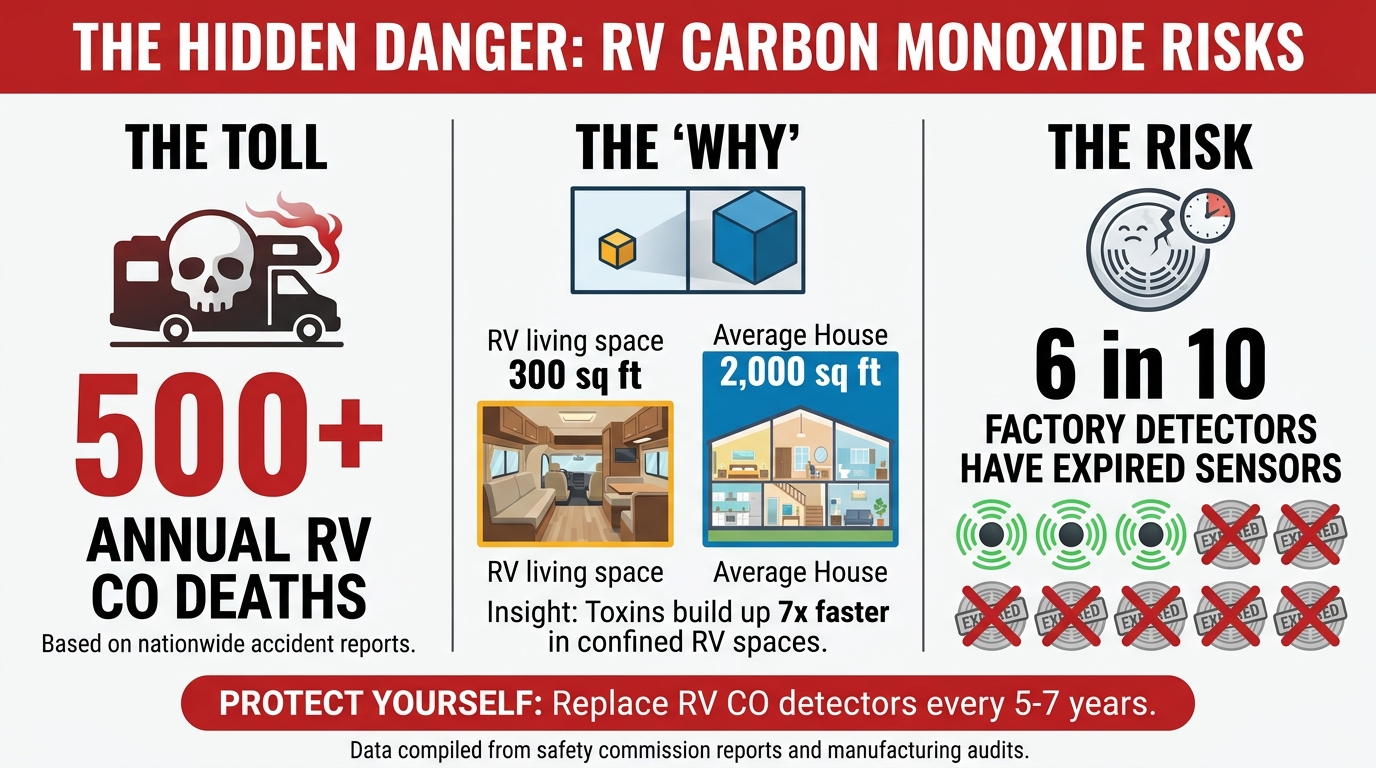
The sensor inside your factory CO detector lasts 5 to 7 years. The green light lasts forever.
So you’ve got a dead sensor, a glowing green light, and a family sleeping 8 feet from a propane fridge that’s pumping CO into the cabin every time it cycles.
That’s not a hypothetical. That’s a Tuesday.
Even if the sensor isn’t expired, it follows UL 2034 — the same standard as house detectors. It won’t alarm below 70 PPM.
But your RV is not a house.
A house is 2,000 square feet. Your RV is 300. A defective appliance that produces 30 PPM in a house can produce over 100 PPM in your camper in the same amount of time.
CO that takes hours to become dangerous in a house takes minutes in your rig. The standard was never designed for a space this small.
A Family Brought In a 2009 Keystone Cougar. They Came for a Slide Motor. I Found Something Else.
Nice couple. Two daughters — 5 and 8. They weren’t there for anything CO-related.
While I had it, I did what I always do. Pulled the fridge out and looked at the flue.
It was bad. A two-inch section completely rusted through. Crumbling when I touched it. The burn marks told me it had been leaking for a long time.
I fired up the fridge on propane and held my meter behind it.
I shut it off and called the owner.
He got quiet. Then he said:
“We just got back from a week in Gatlinburg. Both girls had headaches every morning. My wife thought it was allergies.”
A week. Seven nights. Two little girls. 40+ PPM. Windows sealed. AC recirculating the same air.
A 5-year-old breathes almost twice as fast as an adult. At 40 PPM over seven or eight hours, her blood is absorbing CO faster than her body can clear it. Night after night after night.
I asked him about the CO detector.
“Green light’s on,” he said. “I checked it before the trip.”
I walked over and pulled it off the wall. Manufactured 2009. Same year as the trailer.
The sensor had been dead for at least five years. That green light had been lying to his family for half a decade.
Families Are Dying in RVs Every Summer. Same Causes. Same Silent Detectors.
RV safety advocates estimate over 500 people die in RVs from carbon monoxide every year. The actual number is likely higher.
What Happens at Levels Your Detector Is Designed to Ignore
If Your RV Is More Than 3 Years Old, Here’s What’s Probably Happening Behind Your Fridge.
Your propane fridge has a flue tube that vents combustion gases out through the sidewall. It was tight and clean when it left the factory.
After 3, 5, 10 years of road vibration, temperature swings, humidity, and salt air — it corrodes. The joints loosen. Hairline cracks form.
Every time your fridge cycles on propane — and in summer, running on auto mode, it cycles constantly — CO leaks into the cabin instead of venting outside.
Your factory detector on the floor doesn’t care. It’s either expired or it’s waiting for 70.
Meanwhile your kids are in the top bunk — the highest point in the RV — breathing faster than anyone else on board.
And you’re walking past a green light every morning thinking your family is safe.

I’ve Pulled Too Many Dead Detectors Out of Rigs That People Thought Were Protecting Them.
After the Keystone Cougar, I started recommending the same detector to every customer.
It’s called AirGuard.
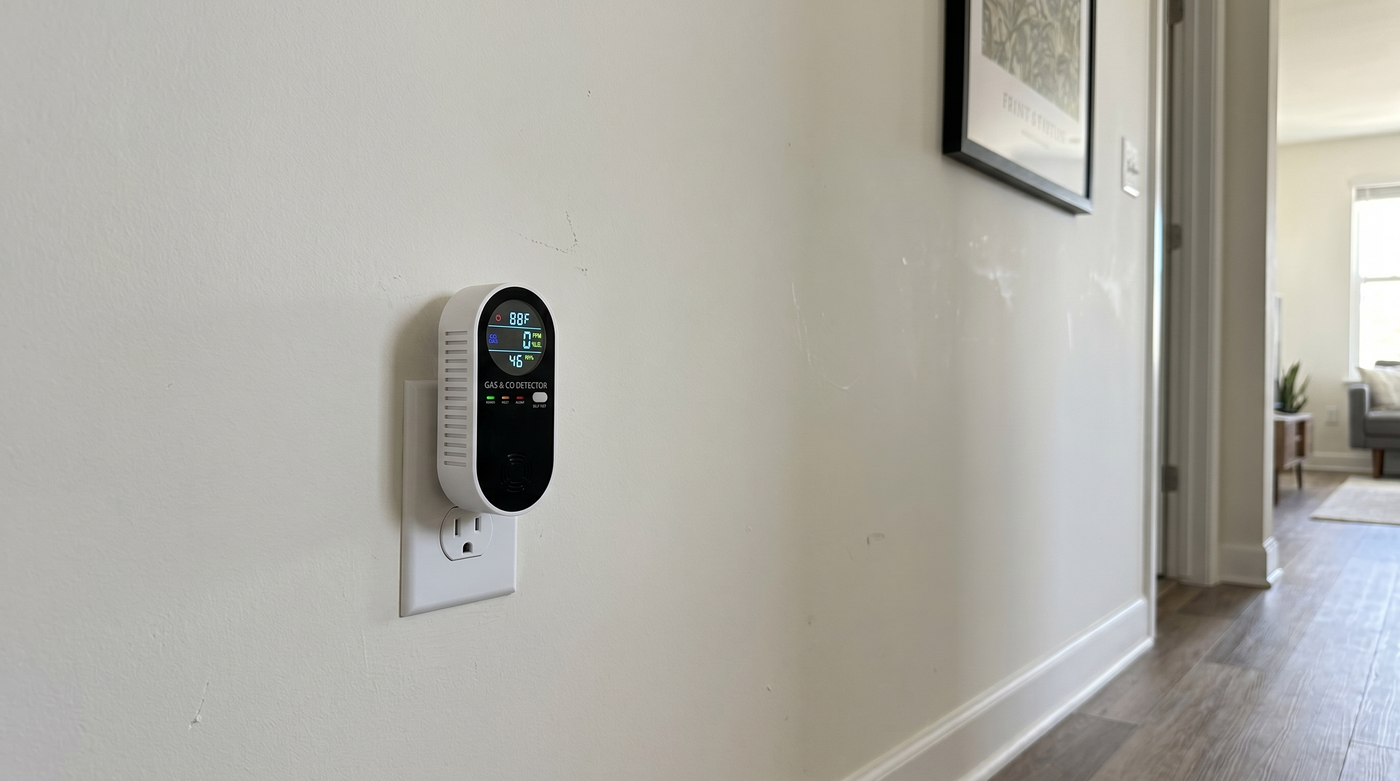
Digital screen. Shows the actual PPM number. Alarms at 10 — not 70. Plugs into any outlet. No battery to die. No sensor to silently expire while a green light keeps telling you everything is fine.
I’ve put about 150 families onto it by now.
Here’s what keeps happening. They plug it in. They see 0. They relax.
Then a few weeks later I get a call. “Kevin, the AirGuard hit 6 last night. What do I do?”
And I say bring it in. Let me check your exhaust.
And every single time I find something.
A loose fitting. A corroded vent. A burner that’s not burning clean. Something that was slowly, quietly leaking CO into their rig.
They caught it at 6. Not at 70.
Their kids were still breathing clean air when they pulled into my shop. Not sitting in an ER.
That Keystone Cougar came in for a slide motor. If the motor hadn’t broken, they never would’ve brought it in. I never would’ve pulled the fridge.
How many rigs are on the road this summer that never came in?
Two Things. Five Minutes.
1. Check behind your fridge. Pull the exterior vent cover and look at the flue tube. If it’s rusty, corroded, or has any gaps — get it serviced before your family sleeps in that rig again.
2. Get a CO detector with a screen. Not the factory one on the floor with the expired sensor. A real one. Mounted at breathing height. That shows you a number.
Your RV is 300 square feet. Your kids are breathing whatever’s in it. And the detector that came with your rig might be doing absolutely nothing right now.
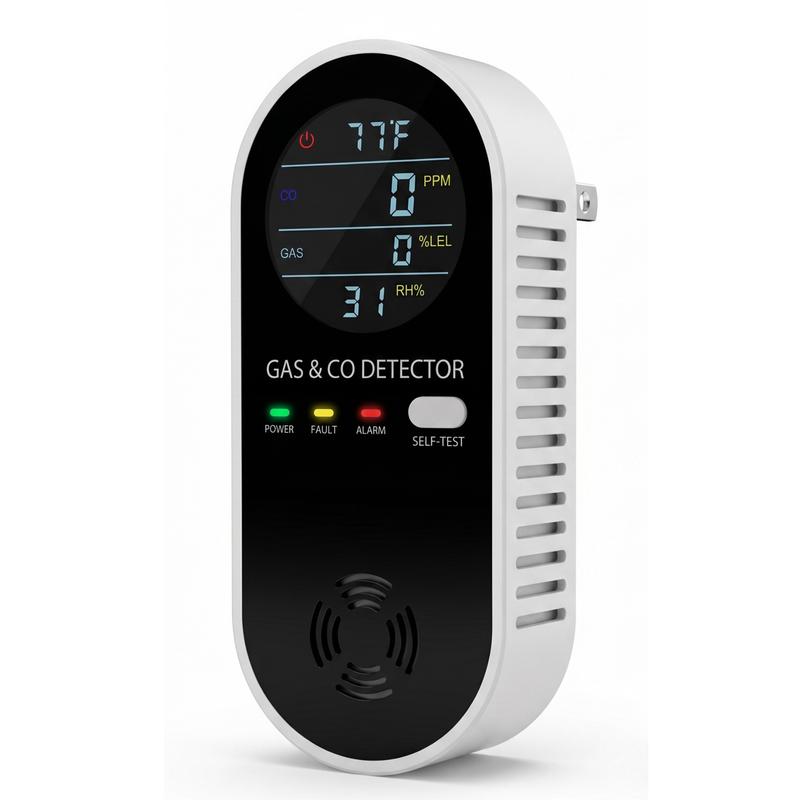
The AirGuard CO & Gas Detector
Digital display. Alerts at 10 PPM — not 70. Plugs into any outlet. No battery to forget. No sensor to expire. The detector RV techs recommend for their own rigs.
See the AirGuard →Plug it in near where your family sleeps. Check the number. Not the green light.
This page is a paid advertisement for AirGuard by Primo Goods.