
Fire Safety Expert Warns: The CO Detector On Your Wall Is Legally Allowed To Stay Silent While Your Family Sleeps Through A Lethal Leak
If you have a carbon monoxide detector in your home and believe your family is protected — read this short article before you go to bed tonight.

I’ve spent 24 years investigating how house fires and gas leaks kill people.
And I can tell you right now — the most dangerous thing in most American homes isn’t a faulty furnace.
It’s the CO detector on the wall that makes you think you’re safe.
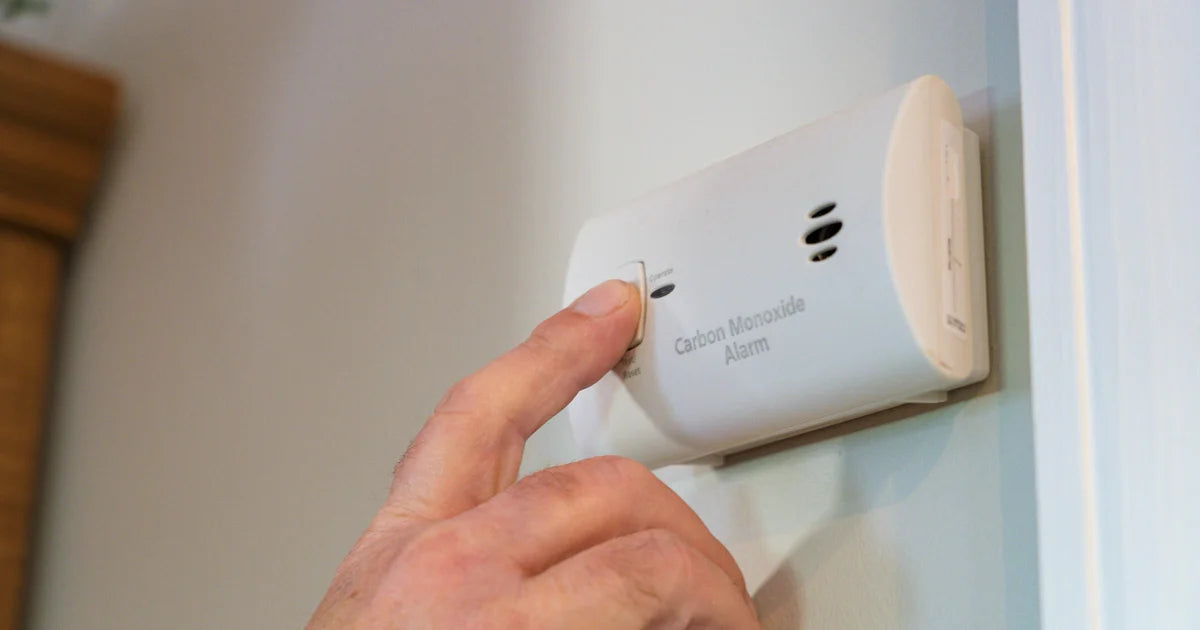
The one with the green light. The one your wife tests every month. The one that always beeps when she pushes the button.
That detector is legally allowed to let your family breathe poison for four hours before it makes a single sound.
That’s not a defect. That’s not an expired unit. That’s the standard.
And once you understand what I’m about to show you, you will not sleep the same way tonight.
The Numbers Nobody Talks About
Carbon monoxide is called “the silent killer” for a reason. You can’t see it, smell it, or taste it. It comes from your furnace, your water heater, your gas stove, your attached garage. And it kills in your sleep.
400 deaths might not sound like a lot.
But here’s what the news doesn’t tell you.
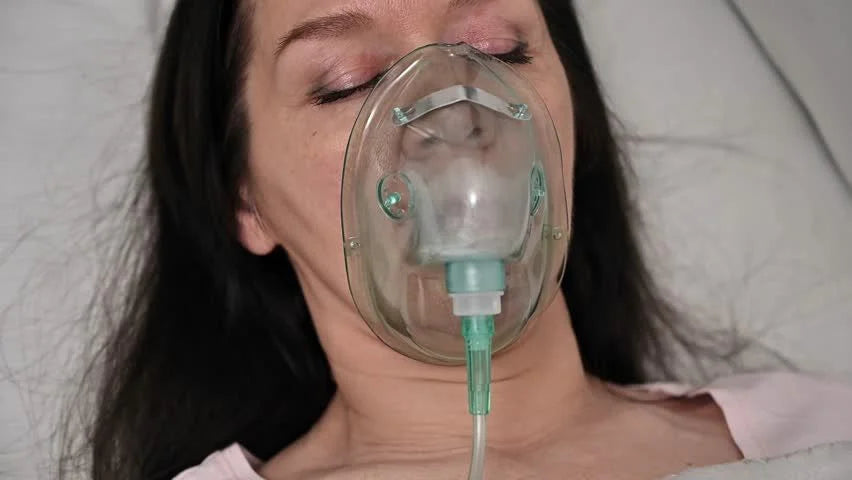
Over 100,000 people end up in the emergency room every year from CO exposure. Most of them thought they had the flu. Headache, nausea, confusion. By the time they realized what was happening, the damage was already done.
And then there are the 8,000+ people who walk out of the hospital with permanent damage. Brain fog that never lifts. Memory problems. Tremors. Children who used to read two grades above level and now can’t finish a sentence.
Those people didn’t die. But they didn’t come back all the way either.
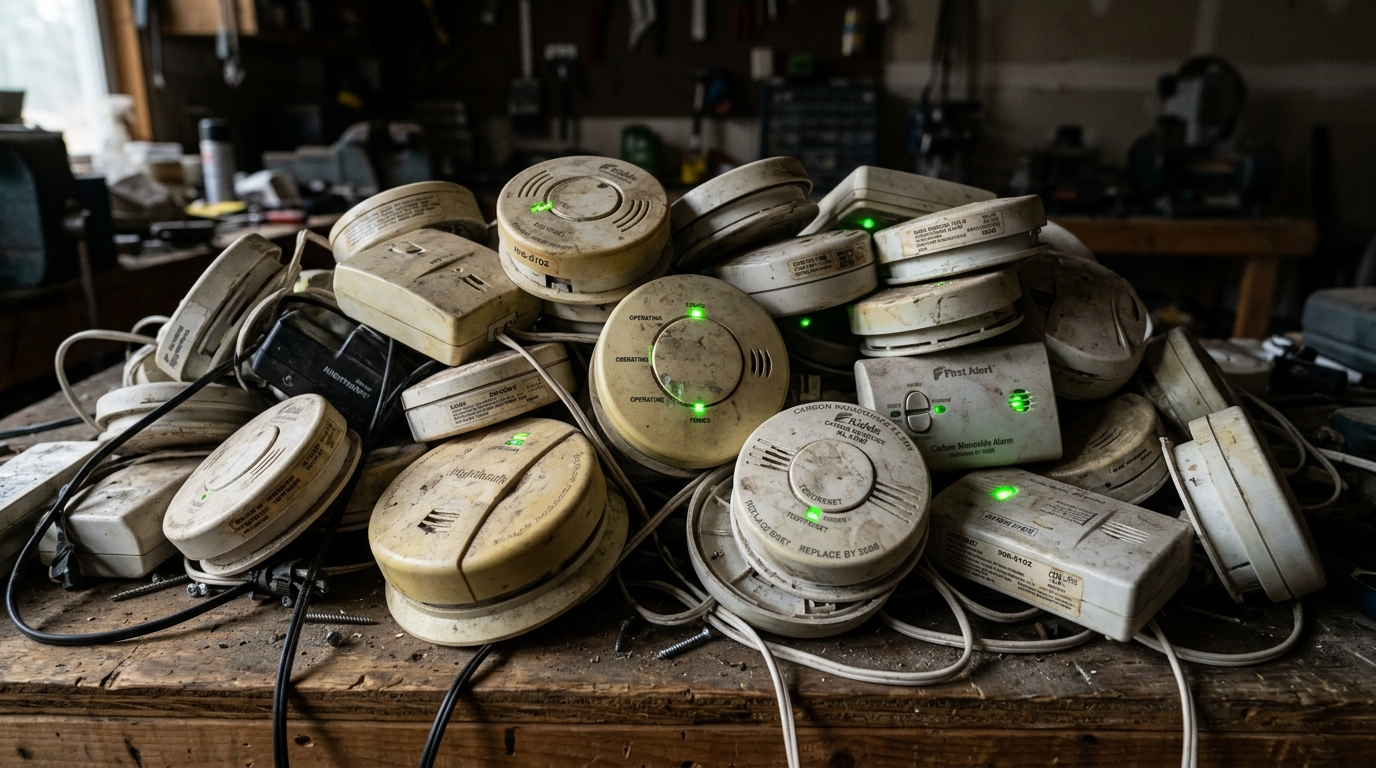
Every single one of them had a detector on their wall.
Every single one of those detectors was “working.”
The Standard They Don’t Want You To Know About
There’s a safety standard called UL 2034.
Every CO detector sold at Home Depot, Walmart, Target, and Amazon is built to meet this standard. It’s the line on the box that says “Complies with UL 2034.”
That line is what makes you think you’re protected.
Here’s what UL 2034 actually allows your “working” detector to do:
At 30 PPM of carbon monoxide — it can stay silent. Indefinitely. No warning. No sound.
At 50 PPM — same thing. Silent. Indefinitely. (For reference, 50 PPM is the maximum OSHA allows in a workplace for an 8-hour shift. Your detector won’t even blink.)
At 70 PPM — the point where an adult starts getting a headache — it’s allowed to take up to four hours before it’s required to make any noise at all.
Four hours of silence. While your children sleep.

What 70 PPM Does To A Sleeping Child Over 4 Hours
This is the part most people don’t want to hear. But I’ve been in enough kitchens at 3 AM to feel obligated to tell you.
At 70 PPM, a child’s blood-oxygen starts dropping. Slowly.
They get a headache they’ll never wake up to feel. Their breathing gets shallow.
Their body thinks it’s getting oxygen but it’s not — it’s absorbing carbon monoxide instead, molecule by molecule. And it doesn’t hurt. That’s the terrifying part. It doesn’t hurt at all.
It feels like being tired. Like being warm. Like wanting to sleep a little longer.
If they’re asleep when it starts, they lose consciousness before they ever wake up.
No coughing. No alarm in their body. Nothing that says get up, get out.
They just don’t wake up.
And by the time that detector on your wall is legally required to make a sound — a small child is already past the point of being able to walk out of it.
That is not a malfunction. That is the design.
See The Detector That Shows You The Actual Number → Used by 2,100+ families and fire professionals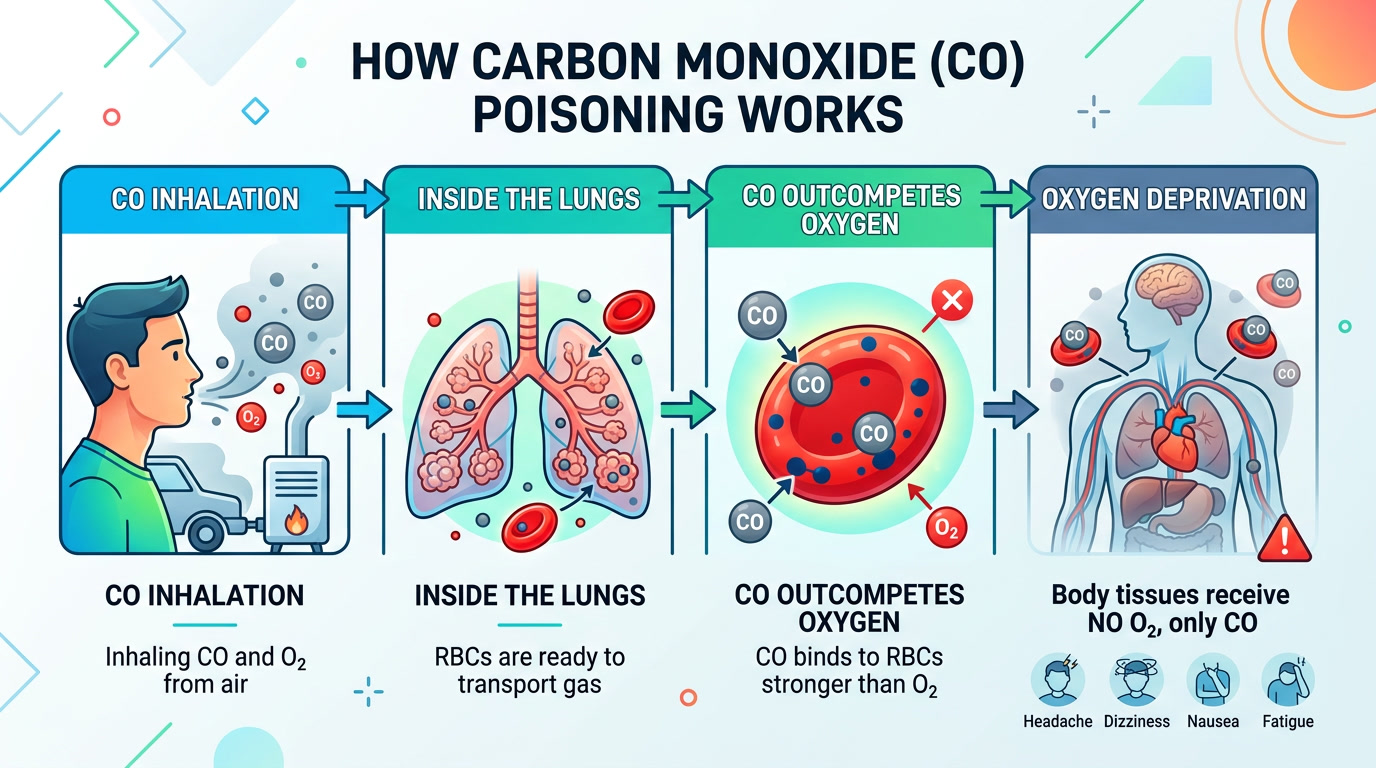
The Test Button Lie
This is the part that makes my job harder every single year.
Every family I’ve investigated — every single one — tells me the same thing:
“We test it every month. It always beeps.”
Here’s what nobody tells you.
That test button tests the speaker. Not the sensor.
It checks whether the unit can make noise. That’s it.
It tells you nothing about whether the sensor can actually detect carbon monoxide. Your detector could have a dead sensor right now — and it would still pass that test. Green light on. Beep when you push the button. Everything looks fine.
And CO detector sensors degrade over time. After 5–7 years, most sensors are unreliable or dead entirely. But the green light keeps glowing. The test button keeps beeping.
How old is the detector on your wall right now?
Can you even remember when you bought it?
Why Buying A “Better” Detector Won’t Fix This
After 24 years, I can tell you — this is where most people make their second mistake.
They read something like this and think: “Okay, I’ll just buy a better detector. A name brand. Something with good reviews.”
It doesn’t matter.
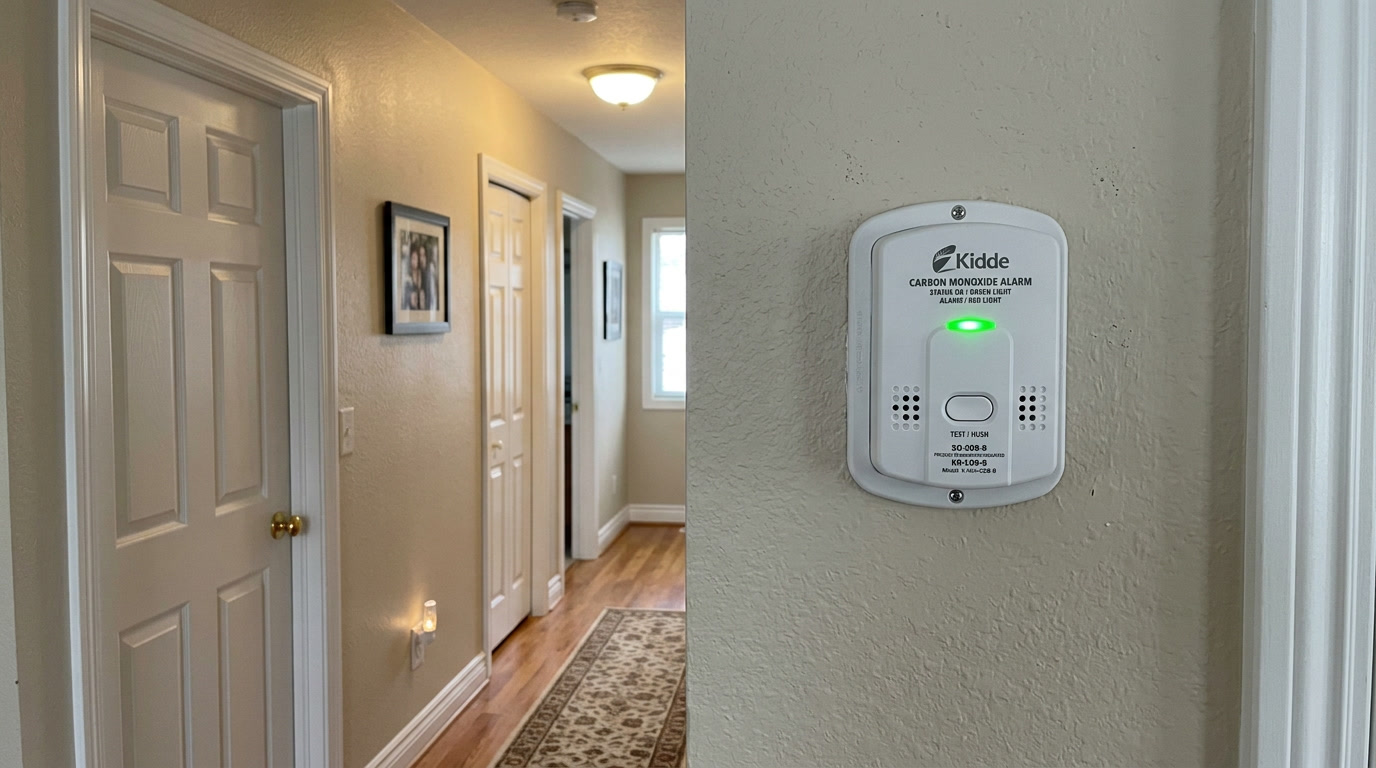
Every detector on Amazon, Home Depot, Walmart — every First Alert, Kidde, Google Nest — all of them are built to the same UL 2034 standard.
All of them stay silent at 30 PPM.
All of them stay silent at 50 PPM.
All of them can wait four hours at 70 PPM.
Better reviews don’t mean better protection. They mean the speaker is louder, or the plastic looks nicer, or it shipped on time.
No consumer review can tell you whether a detector would have caught a slow leak at 3 AM. Because the only people who could tell you that story aren’t writing reviews.
What Actually Works
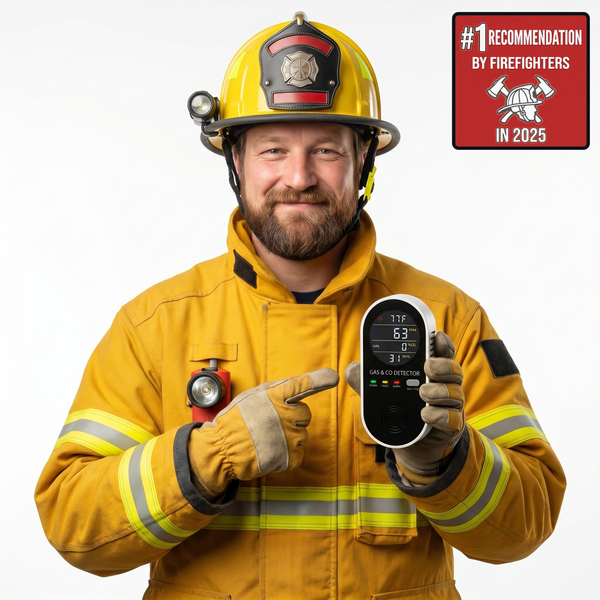
In my department, we use professional-grade meters that show the exact PPM level in real time. Not a green light. Not a yes-or-no. An actual number.
When I walk into a house on a CO call, I know within three seconds exactly how dangerous it is. Because I can see the number.
For years, that technology wasn’t available to regular homeowners. It was department equipment. Expensive.
That changed about two years ago when a company called Primo Goods released a consumer version.
It’s called AirGuard.
How AirGuard Is Different From Everything Else
AirGuard has a digital screen that shows the actual CO level in your home. In real time. Not after four hours. Not after 70 PPM. Right now. Starting from 0.
You walk past it in the hallway, you glance at the number. Zero means you’re safe. Anything above zero means something needs attention.
The moment anything enters the air — even at levels your old detector would completely ignore — you see it on the screen. You catch the problem while it’s still just a problem — not an emergency. While your kids are still breathing clean air. While you’ve got time to call an HVAC guy, not 911.
| Feature | Standard Detector | AirGuard™ |
|---|---|---|
| Shows CO level | ❌ Green light only | ✓ Live PPM number from 0 |
| Detects | ❌ CO only | ✓ CO + Natural Gas + Propane |
| Install | ❌ Drill, ladder, ceiling | ✓ Plug in, 30 seconds |
| Sensor check | ❌ Tests speaker only | ✓ Self-test confirms sensor |
| Warranty | 5–10 years | ✓ Lifetime |
It also picks up natural gas and propane — not just CO. Same unit, two sensors. You plug it into any wall outlet at eye level. No ladder, no tools, no batteries to forget about.
Get 50% Off AirGuard Today → Free shipping · 100-night trial · Lifetime warranty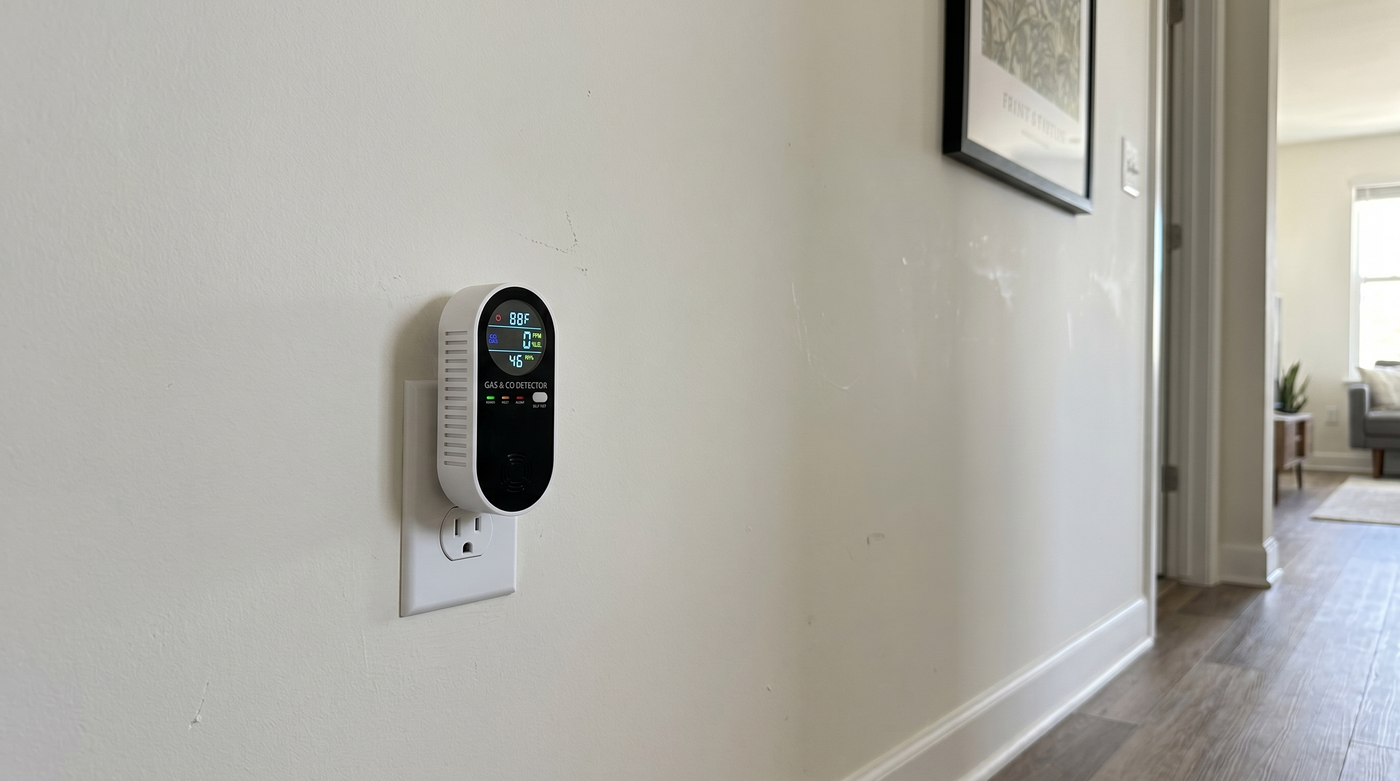
What Families Are Saying


What I Recommend
Safety guidelines say one detector per floor, plus near every sleeping area. For most homes that’s 3–4 units.
The 4-pack is the right choice for most families — one per floor, plus the kitchen or furnace area. That’s what I’d put in my own home.
Last I checked, pricing was:
2-Pack — $119 (apartments, condos, or a gift for aging parents)
4-Pack — $199 (standard house, one per floor + furnace/kitchen)
8-Pack — $339 (your home + your parents’ home, split a pack)
One Last Thing
I want to be straight with you.
Tonight, your furnace is going to turn on. Same as every night.
And the detector on your wall is going to sit there with its green light glowing. Same as every night.
You have no way of knowing what the number is. Because your detector doesn’t have a number. It has a light. And that light means nothing.
You can press the test button. It’ll beep. That also means nothing.
You can check the reviews. Five stars. That means nothing either.
The only thing that means something is the actual PPM reading in the air your family is breathing right now. And you can’t see it.
Unless you change what’s on your wall.
Check AirGuard Availability → Free shipping · Ships within 24 hoursADVERTISEMENT · Paid promotional content for AirGuard by Primo Goods. “Cpt. Michael Torres” represents a composite fire safety professional narrative based on real incident patterns; specific quoted readings are illustrative. Carbon monoxide is a serious safety risk — if you suspect a leak, evacuate and call your local emergency number. Consult your local fire department for CO detector guidance in your region. UL 2034 is a real safety standard; readers are encouraged to verify specifications independently.
© 2026 Primo Goods. AirGuard® is a trademark of Primo Goods. Results may vary. Not medical advice.