
How A Gas Company Technician Exposed The 70 PPM Flaw That's Failing 400+ American Families In Their Sleep
"The headaches I blamed on pregnancy. My toddler's headaches I blamed on daycare. We'd been breathing elevated carbon monoxide for 8 months. Our detector never made a sound."
The HVAC Tech Found What My Detector Missed For 8 Months
It was supposed to be a routine furnace check.
November. Heating season. The HVAC tech came out for our annual service — something I'd been putting off for two years if I'm being honest.
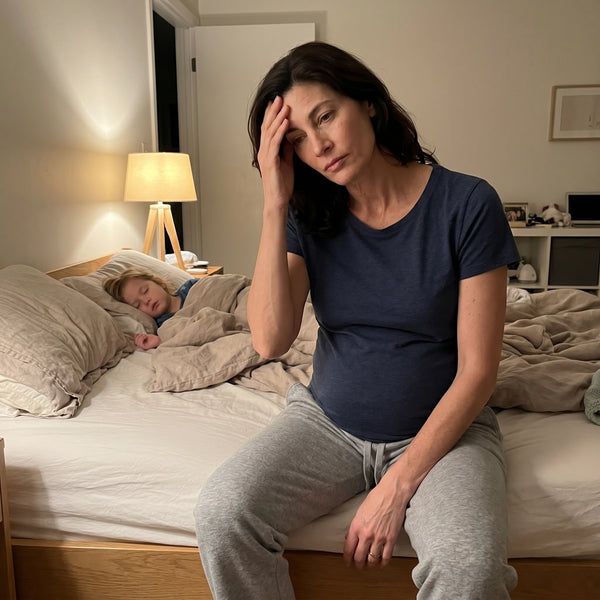
I was six months pregnant. Exhausted. My toddler had been complaining of headaches. I'd been having them too — the dull, throbbing kind that started every evening and disappeared by mid-morning.
Pregnancy symptoms, I told myself. Stress. Bad sleep. Normal stuff.
The tech was in our basement maybe ten minutes before he came back upstairs with a look I'll never forget.
"Ma'am, when's the last time you had your heat exchanger inspected?"
I didn't even know what that meant.
He explained. Then he pulled out a handheld meter and walked toward our hallway.
The numbers climbed: 18… 24… 31…
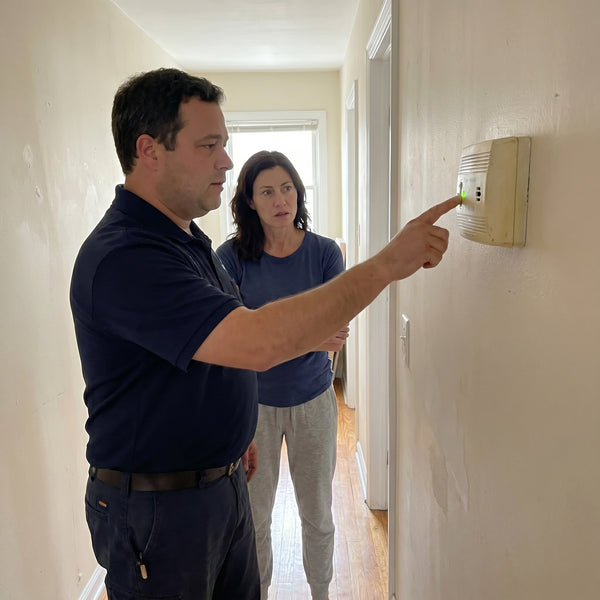
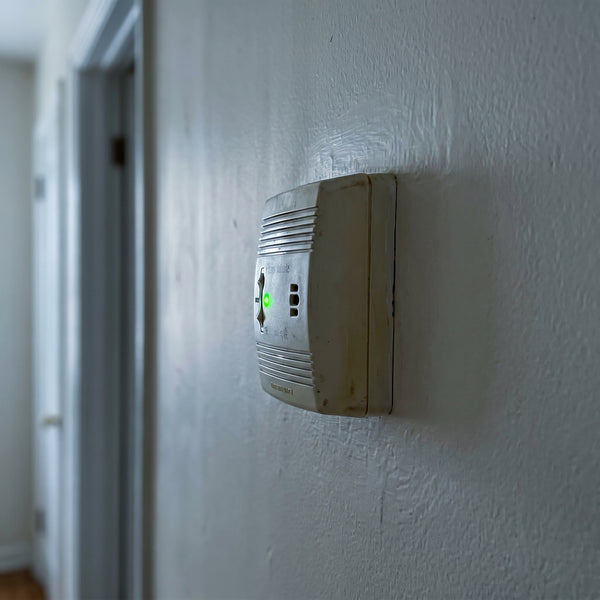
He stopped in front of our carbon monoxide detector. Green light glowing. Silent. Just like it had been for eight years.
"You're at 35 PPM right here," he said. "High enough to make you sick. Not high enough for that thing to alarm."
I felt my heart drop into my stomach.
"What do you mean?"
He pointed at the detector.
"These don't alarm until 70 parts per million. And even then, it takes one to four hours before they make a sound. You've been breathing low-level CO for months. That detector knew. It just isn't designed to tell you yet."
I looked at the green light. Still glowing. Still silent.
My hand went to my belly.
"I See This Every Week"
Here's what made me furious.
After the HVAC tech left, I called the gas company emergency line. I needed someone official to confirm how bad it was.
They sent a technician within the hour.
The moment he stepped through my front door, his meter started pinging.
"27 PPM right here in your entryway," he said. "We evacuate homes at 50."
He walked through every room. Kitchen: 31 PPM. Hallway: 35 PPM. My daughter's bedroom: 38 PPM.
The room where she slept. Every night. For eight months.
I pointed at our detector. Green light glowing. Silent.
"Why didn't it go off?" I asked.
He shook his head.
"These don't alarm until 70.
You're at 38. High enough to make your whole family sick. Not high enough for that thing to alarm."
I asked him if this was unusual. If we were just unlucky.
He looked at me and said three words I'll never forget:
"I see this every week."
Every week. Families breathing low-level CO. Detectors glowing green. Sensors that passed every test.
"The problem isn't broken detectors," he said. "It's detectors working exactly as designed. They're designed to stay silent until levels get dangerously high."
The 70 PPM Standard That's Failing 400+ Families A Year
After that day, I became obsessed.
I spent weeks researching. Reading studies. Digging through Reddit threads where other families shared their near-misses.
What I found made me sick.
Here's what the carbon monoxide detector industry doesn't advertise:
The Consumer Product Safety Commission sets the alarm threshold at 70 PPM.
And even then, the detector doesn't alarm immediately. Here's the actual standard:
- 70 PPM: Alarm activates in 60–240 minutes
- 150 PPM: Alarm activates in 10–50 minutes
- 400 PPM: Alarm activates in 4–15 minutes
Read that again.
At 70 PPM — the level where your detector finally decides to wake up — you've already been breathing elevated CO for one to four hours.
Your children have been breathing it in their sleep.
Your elderly parents have been breathing it in their sleep.
Your pregnant wife has been passing it to your unborn baby with every single breath.
And the detector stays silent. Green light glowing. Because the regulations say that's acceptable.
Over 400 Americans die from carbon monoxide poisoning every year.
100,000+ end up in emergency rooms.
84% of these incidents happen between November and February — when furnaces run all night and windows stay sealed.
Almost every single one of these families had a "working" detector on their wall.
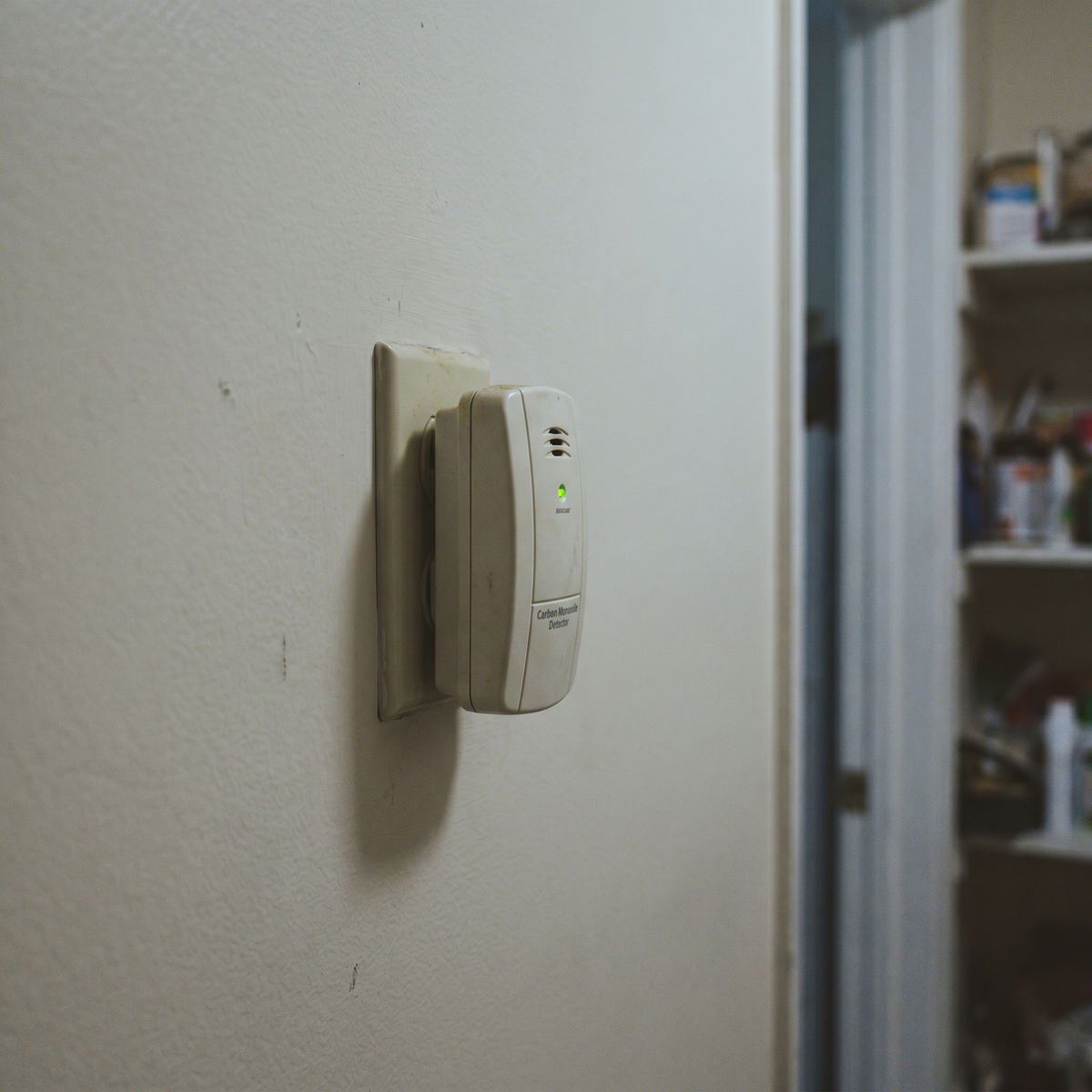
Why Cheap Detectors Are Failing American Families
Those cheap detectors have THREE fatal flaws:
Flaw #1: They wait until it's almost too late. They don't alarm until 70 PPM. By then, you've been breathing elevated CO for hours. Your kids have been breathing it in their sleep.
Flaw #2: They only show a light, not levels. You have no idea what's in your air. Levels could be rising all night and you'd never know until symptoms hit.
Flaw #3: They don't detect natural gas. If your stove leaks, your furnace leaks, your water heater leaks actual gas — those detectors stay completely silent.
But here's the real kicker:
The design itself creates a false sense of security.
Families see that green light glowing and think they're fully protected. They test it, it beeps, they go back to trusting it.
The test button? It only checks the battery and speaker. It doesn't tell you if the sensor is still working properly.
You could have a completely non-functional detector that passes every test you run.
We're literally training ourselves to ignore a deadly threat.
And the worst part? The same detectors that stay silent during real exposure scream at 3 AM for no apparent reason.
I found hundreds of families on Reddit living this nightmare:
"Anyone else have random false alarms? Ours has gone off 5 times this month. Always between 2–5 AM. My kids are terrified."
"I hate CO detectors for false positives. Mine causes so much anxiety I'm ready to just unplug it rather than deal with it."
One mother's husband deactivated their detector after repeated false alarms.
Then she used their gas fireplace one evening and started feeling dizzy.
"Ours was around 85 PPM," she wrote. "Pretty sure I almost poisoned my whole family."
Cheap detectors cry wolf until families disable them. Then they stay silent during actual exposure.
The system isn't just flawed. It's set up to fail.
What The Professionals Actually Use
After my experience, I asked everyone — the HVAC tech, the gas company technician.
Same question: "What detector do YOU trust?"
Same answer:
"One that shows actual numbers. Real-time PPM readings. So I know exactly what's in my air — not just that the power is on."
The gas company technician said:
"If you have kids or elderly in the home, get a monitor that alerts at a much lower level. Standard detectors don't alarm at levels low enough to catch chronic exposure."
That's when he told me about AirGuard.
The Detector That Doesn't Wait Until You're Already Poisoned
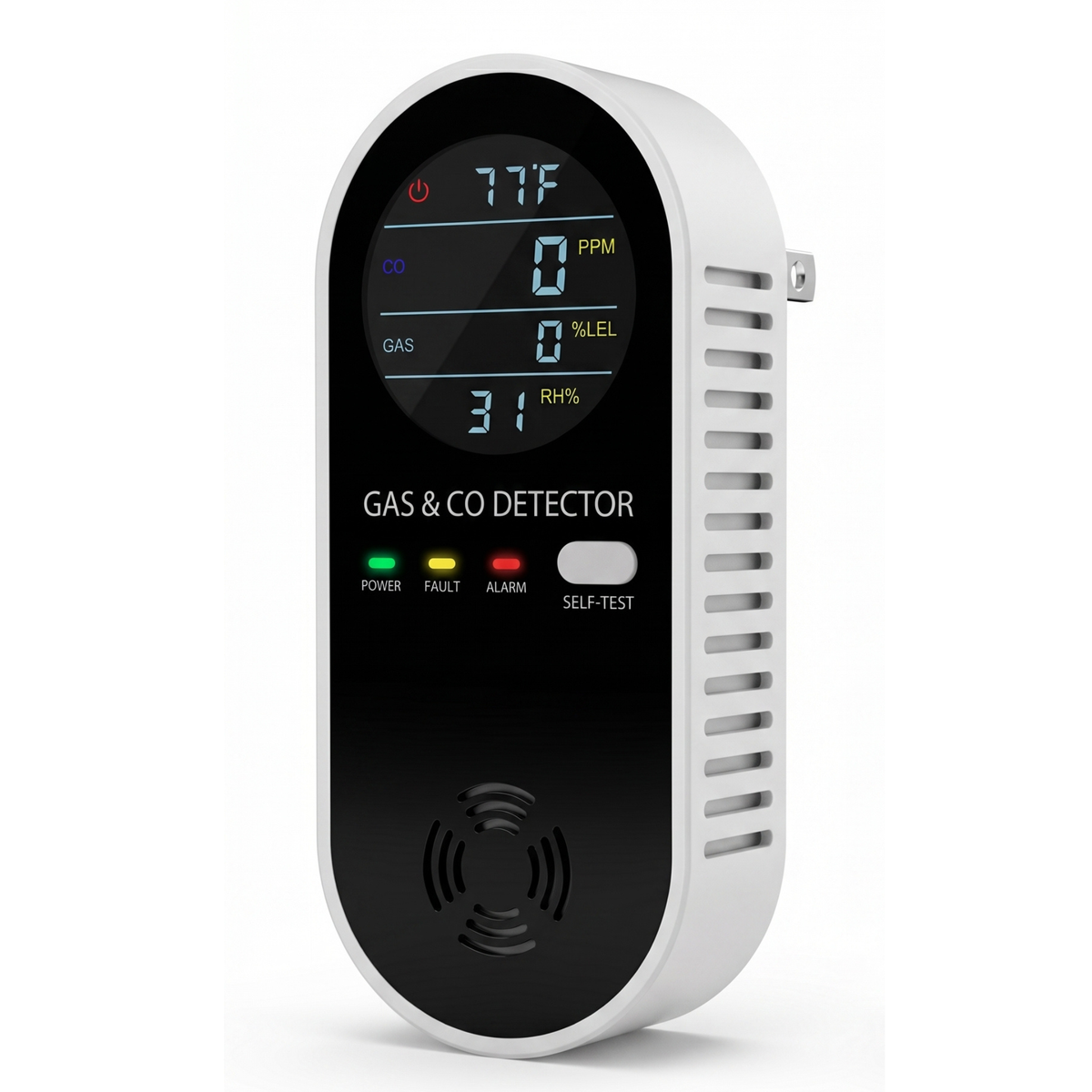
AirGuard is different from every detector I've ever owned.
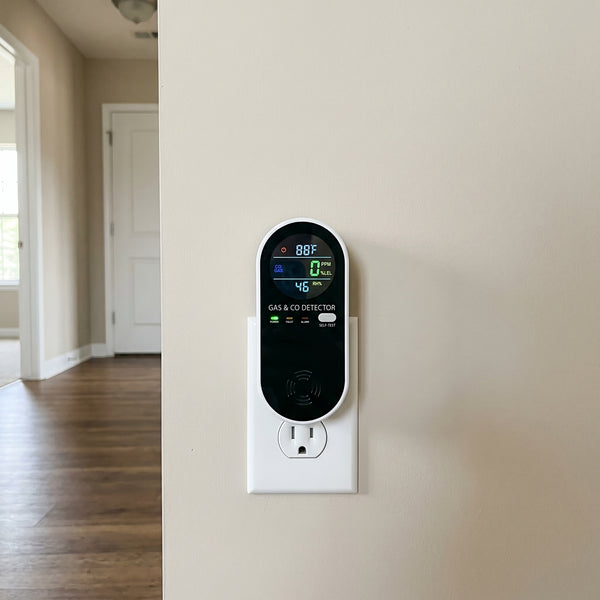
There's no green light.
Instead, there's a screen. With a number.
When there's no CO in your home, it shows "0."
Not a light that could mean anything.
An actual zero. Real-time. Every second.
You can see that your family is safe. Not hope. Not trust. See.
And unlike standard detectors that wait until 70 PPM:
AirGuard alerts you the moment levels begin rising.
10 PPM? You see it.
35 PPM — the level that made my family sick for months? You're already calling the gas company. Hours before a standard detector would make a sound.
4-in-1 Protection
AirGuard monitors four threats at once:
- Carbon Monoxide — from the very first PPM, not at 70
- Natural Gas — catches leaks from furnaces, stoves, water heaters
- Propane — for homes with propane appliances
- Temperature & Humidity — for a healthy environment
No gaps. No blind spots. Complete protection.
My Family's Transformation
I ordered AirGuard that night. 4 units.
I was skeptical. Could something this simple really make that much difference?
I plugged the first one in near our new furnace.
The display lit up.
"0"
Real numbers. Real-time. I could actually see what we were breathing.
For the first time since that terrifying day, I actually knew my family was safe. Not because a green light told me so — because I could see the proof.
No more guessing. No more trusting. Just knowing.
I put the second one in the kitchen near the stove. Third one in the hallway outside the bedrooms — right where our old detector had glowed green while we were being exposed.
I check them every morning now. Just a glance.
Zeros across the board.
That's all I need to see.
Our baby was born in March.
Healthy. Perfect. Ten fingers, ten toes.
I cried when the doctor said everything looked normal.
My doctor said I was lucky. Low-level CO exposure during pregnancy can contribute to developmental issues, low birth weight, even miscarriage. We caught it in time — barely.
Last month, our HVAC tech came back for a routine check. He saw the AirGuard units throughout the house.
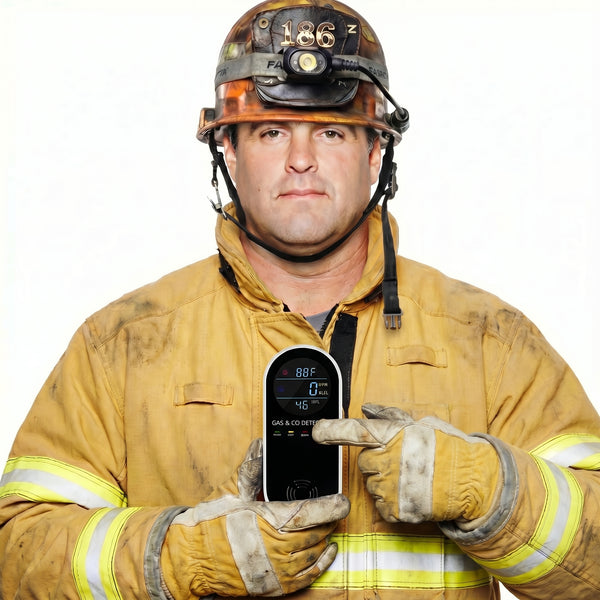
"Smart move," he said. "These are the kind of monitors professionals use."
My mother-in-law had a detector from 2009 on her wall. Fifteen years. Green light glowing.
I bought her an AirGuard for Christmas.
"I had no idea," she said. "I test it every month. It beeps. I thought that meant…"
I know. I thought so too.
Now she calls me every week:
"Still zeros. How do you like that?"
I like that just fine.
The Real Cost Of Cheap Detectors
Here's something disturbing:
Most hardware stores don't stock professional-grade detectors.
Why?
Because cheap detectors have better profit margins. They cost a few dollars to make and sell for $25. Stores make more money on products that don't actually give you detailed readings.
AirGuard is different.
- Professional-grade electrochemical sensor — the same technology gas company inspectors rely on
- Real-time digital display — see actual PPM readings, not a meaningless light
- 3-in-1 gas detection — CO, natural gas, AND propane in one unit
- Alerts from the first PPM — not waiting until 70 PPM when levels are already dangerous
- Plug-in design — no ladder, no tools, no electrician. 30 seconds to install.
The gas company technician told me:
"I recommend monitors like AirGuard to every family after a call like yours. The basic green-light detectors meet code. This kind actually gives you information."
Let me be direct.
My ER visit after we discovered the leak? $2,400.
The specialist appointments for my baby? $800.
AirGuard costs a fraction of that in the multi-packs.
Do the math.
But it's not about money.
It's about watching your daughter sleep knowing — not hoping — that she's safe.
It's about not becoming the family the gas company technician talks about at his next call.
Your Family Deserves Real Protection
I'm sharing this with you because AirGuard releases new production batches every couple of months, and due to high demand, when they sell out it can take weeks or even months for them to come back in stock. Right now, AirGuard is offering their best pricing:
2-Pack — $108.00 ($54.00 each) Perfect for apartments or a gift for aging parents
4-Pack — $157.00 ($39.25 each) Full home coverage
8-Pack — $196.00 ($24.50 each) Your home + your parents' home
Every order includes:
- Lifetime Replacement Warranty
- Free Shipping on all multi-packs
Two Futures
Future One: Continue trusting that green light. Hope it means something. Risk becoming one of the 400+ families who don't wake up this year.
Future Two: See what you're actually breathing. Know — not guess — that your family is safe.
The choice seems obvious.
Don't wait for your family's close call.
I got lucky. An HVAC tech saved my family because I happened to schedule a routine check.
You might not get that lucky.
with AirGuard®