
After 18 Years In The ER, I Know Exactly What Carbon Monoxide Does To A Family — And Why Your "Working" Detector Is Probably Lying To You
The Christmas Eve that changed how I look at every green light in my own house. A nurse’s notes.

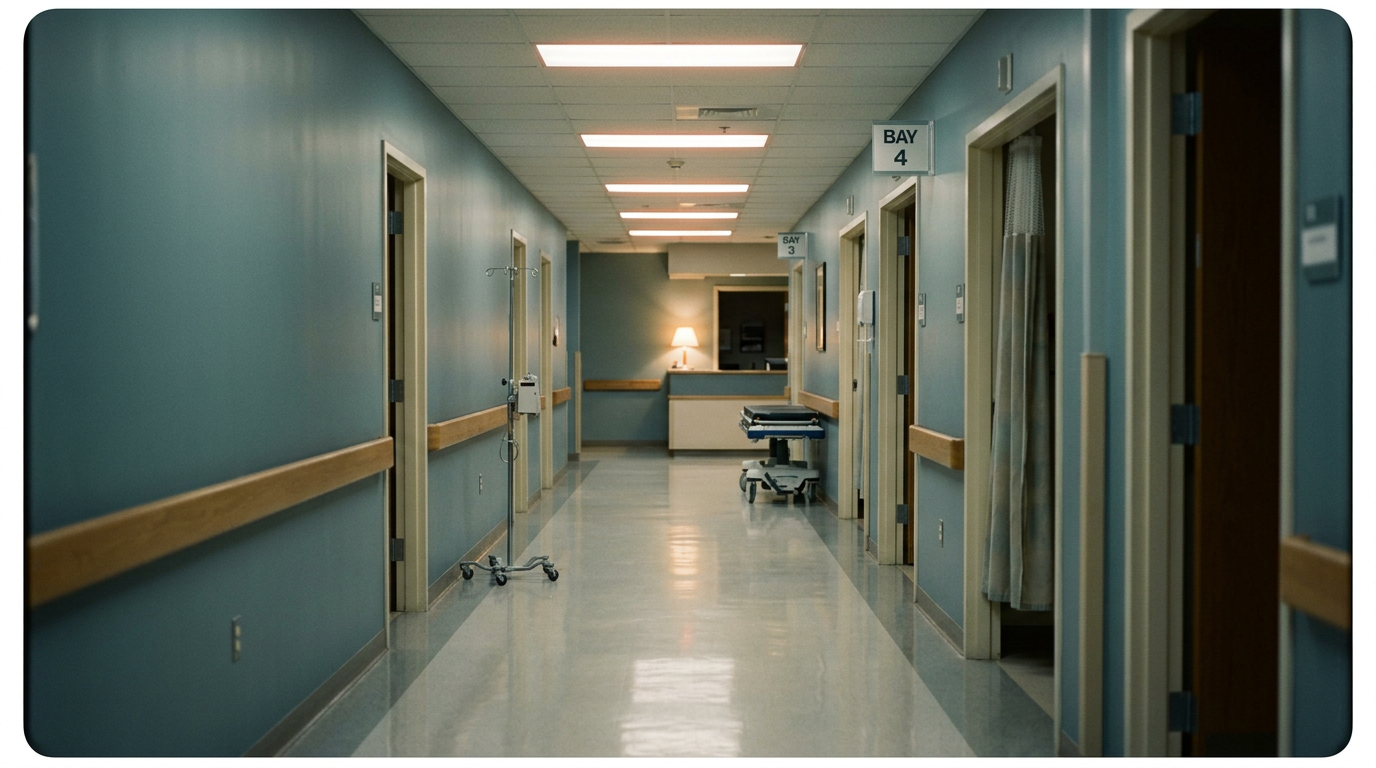
The hallway outside Bay 4. I’ve walked it ten thousand times. On Christmas Eve a few years ago I walked it differently.
I’ve been a nurse for eighteen years. Most of them in emergency departments in northern Wisconsin.
You see a lot of things in an ER. Car accidents. Heart attacks at Thanksgiving tables. Kids who swallowed what they shouldn’t have.
But the calls that haunt me — the ones that changed how I live at home — are the carbon monoxide calls.
They almost always come in winter. They almost always come as a family. And they almost always come with the same sentence from EMS on the radio:
“CO alarm never went off.”
I want to tell you about one of them. And I want to tell you what I found in my own house after I went home that night.
Christmas EveThe Family From Eagle River
It was a quiet night until it wasn’t.
Around 11:40 PM the overhead paged a trauma. Then another. Then two more.
Four patients. Same house. Same cause.
Mom. Dad. A seven-year-old boy. A four-year-old girl.
They came in on backboards, one after another. The paramedics had pulled them from a house on a quiet road outside Eagle River. A neighbor had stopped by with a plate of cookies and found the front door cracked open and the dog barking at the glass.
She looked inside. She called 911.
By the time EMS arrived, the dad had already walked out onto the porch on his own feet and collapsed in the snow. That probably saved his life.
The rest of the family was inside.
The furnace had developed a crack in the heat exchanger sometime that fall. You can’t see those cracks from the outside. The unit looked fine. The pilot looked fine. The house smelled like a house.
Carbon monoxide doesn’t smell like anything.
That’s the whole trick.
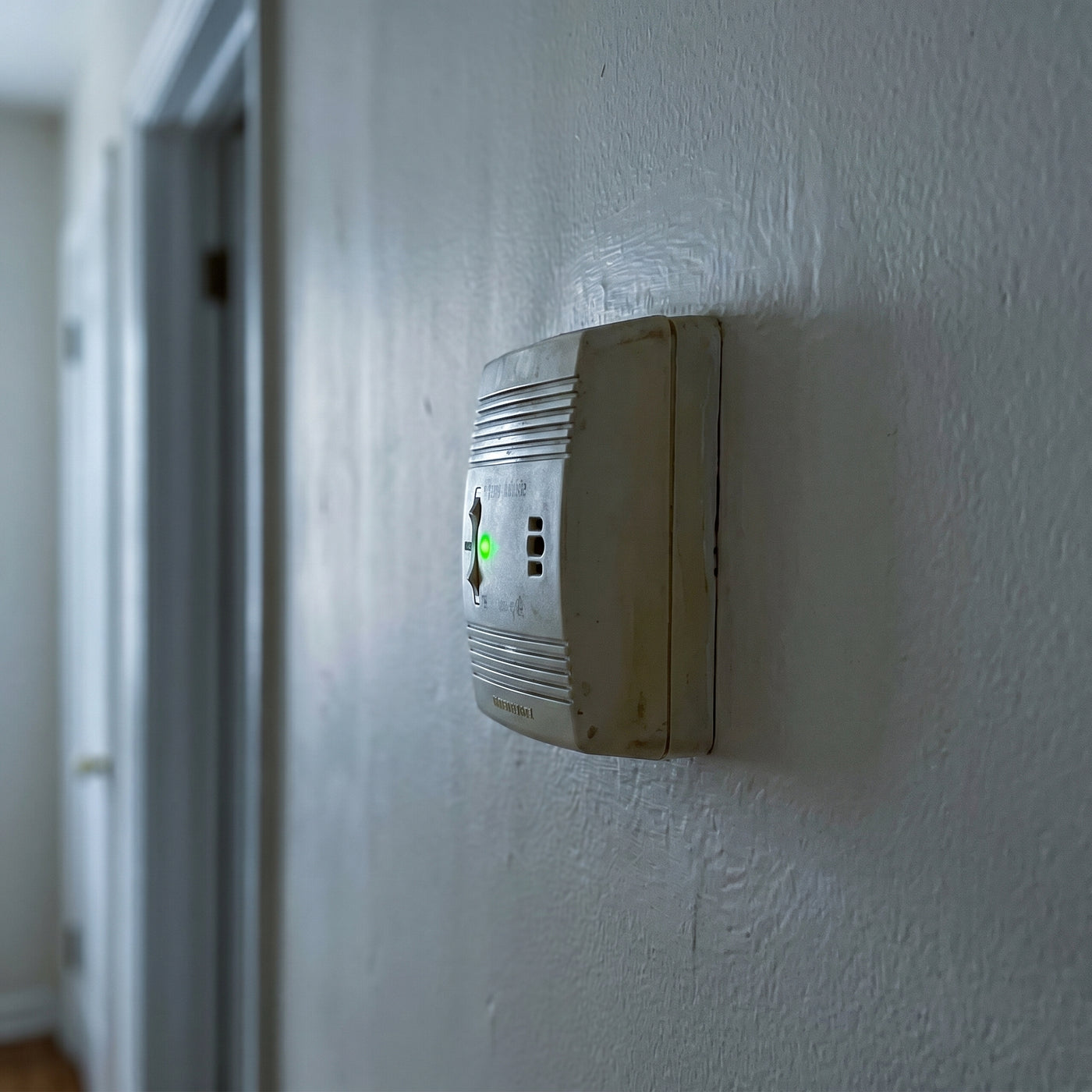
They had a detector. It was a plug-in unit in the hallway outside the kids’ rooms. It was eleven years old. Nobody had ever pressed the test button, because it had a little green light on, and people assume a little green light means everything is fine.
I can tell you, standing in a trauma bay at midnight on Christmas Eve, a little green light does not mean everything is fine.
In The BayWhat CO Actually Does
I’ll spare you the part of the night I spend the most time trying to forget.
But I’ll tell you what carbon monoxide does, because I think if people understood it, they would think about their detectors differently.
CO binds to the hemoglobin in your blood two hundred times stronger than oxygen does. When you breathe it in, your red blood cells grab it and refuse to let go. They stop being able to carry oxygen.
Your body is still moving air in and out. Your lungs are fine. Your chest rises and falls.
But the oxygen isn’t getting to your brain.
That’s why people don’t wake up. It isn’t drowning, and it isn’t suffocation in the way we usually think about it. It’s suffocation at the cellular level, while you sleep, while you look completely peaceful.
The dad from Eagle River lived. He woke up in the ICU two days later.
The boy lived.
The little girl lived, after a long stretch in hyperbaric.
The mom did not.
She was thirty-four years old. She had put the kids to bed, read them a book about a reindeer, kissed her husband good night, and gone to sleep on what she thought was an ordinary Tuesday in December.
The detector in her hallway had a green light on the whole time.
The Drive HomeThree A.M.
I got off shift at 3 AM.
I drove home on empty roads. There was new snow on the fields, and the kind of quiet you only get in the middle of the night in the middle of winter in the middle of nowhere.
I sat in my driveway with the engine off for a long time.
I was thinking about my own house. My own hallway. My own detector, which was a white plastic plug-in I bought at a hardware store when we moved in.
I couldn’t remember when I’d bought it.
I couldn’t remember if I’d ever tested it.
I couldn’t remember if there was a date stamped on the back.
I went inside. My husband was asleep. The dog was asleep. I took the detector off the wall and carried it into the kitchen and put it under the light above the stove.
There was a sticker on the back. A replace-by date.
It had expired four years earlier.
The green light was still on.
What I LearnedHow Detectors Die
Here is the thing nobody tells you when you buy a carbon monoxide detector.
The sensor inside it wears out. Most of them are rated for five to seven years. After that, the electrochemical cell inside the unit degrades and stops responding to CO reliably.
But the rest of the unit keeps working.
The green light keeps glowing. The chirp battery still chirps when the battery is low. The test button still beeps when you press it, because that button tests the speaker, not the sensor.
The sensor is dead, and the detector doesn’t know, and you don’t know.
Most of the CO calls I’ve worked involved a detector that was on the wall. Some of them were brand-name. Some had been installed by the builder. Almost all of them had a green light on when EMS walked in.
I started asking EMS to note the age of the detector on their run sheets. When I looked at the numbers, the pattern was ugly.
If your detector is older than seven years, you are relying on a device that is statistically more likely to fail silently than to catch a leak.
It doesn’t matter how much you paid for it. It doesn’t matter what brand. It doesn’t matter that the light is green.
Time is what kills them. And you can’t hear it happen.
The Second ProblemThe Number Nobody Shows You
There’s a second issue I didn’t understand until I started looking into it.
Most household CO detectors in the US are built to a standard called UL 2034. That standard sets minimum thresholds for when the alarm is allowed to go off.
Those thresholds are higher than you’d think.
At 70 parts per million, a UL 2034 detector is allowed to wait up to four hours before it alarms.
Seventy parts per million is already high enough to cause headache, dizziness, and impaired judgment in most adults. In kids and older people it’s worse. In people with heart conditions it can be deadly.
And your detector is allowed to sit there for four hours at that level without making a sound.
The standard was written to prevent nuisance alarms. Which is fair enough for the neighbor who runs his car in the garage for thirty seconds. But it means the typical detector isn’t measuring the slow, silent leak — the cracked heat exchanger on a cold night — until the level is already dangerous.
You don’t want an alarm. You want a number.
A readout that shows you PPM in real time, all the time. So you can see 15. Then 25. Then 40. So you can get up, open the door, and call somebody — before you’re at 70 and your detector is still deciding whether to alarm.
What I DidThe Detector On My Wall
I threw the expired one in the trash.
I did a lot of reading over the next few weeks. I talked to the fire chief in the next county, who has been working CO calls for thirty years. I talked to a biomedical engineer friend in Madison who explained sensor drift to me in a way that finally made sense.
I ended up with a plug-in unit that had three things I wanted.
It had a digital readout that shows PPM continuously, so I could see a number at a glance instead of waiting for an alarm to make a decision for me.
It had a low-level detection mode that reads down to 10 PPM. Below the UL 2034 threshold. Low enough to catch the slow leaks.
And it had an end-of-life indicator that actually tracks the sensor, not just the battery. So when it’s time to replace the unit, the unit tells me. It doesn’t sit there with a green light pretending to be fine.
I plugged one into the hallway outside our bedroom. One in the kitchen. One in the basement near the furnace. One by my daughter’s room on the other side of the house.
That was almost three years ago. I have watched the readout every morning when I make coffee. It reads zero almost every day.
Almost.
Last January it read 14 for about forty minutes one evening. I called the HVAC guy the next day. He pulled the cover off the furnace and found a small crack forming at the base of the heat exchanger. He replaced it.
The old detector would not have made a sound.
I would have gone to sleep. My husband would have gone to sleep. Our daughter would have gone to sleep.
I think about that night a lot. I don’t want to, but I do.
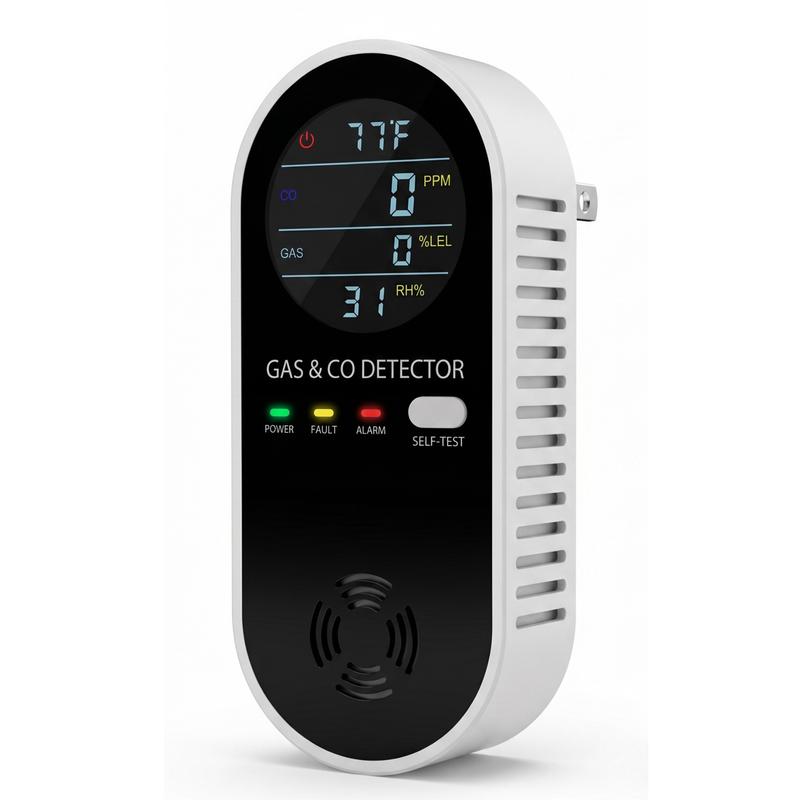
The one I settled on is made by a company called Primo Goods. It’s called AirGuard. I’m not affiliated with them. I bought the first one with my own money after that Christmas, and then I bought three more for the rest of the house.
If you want to look at the one I have on my wall — here’s where I ordered mine →
What I’d Tell YouIf You Were Sitting In My Kitchen
I’m not going to lecture you about fire safety. You’re a grown adult. You know your house better than I do.
But if I were sitting across from you at my kitchen table, here is what I would say.
Go look at your detector right now. Take it off the wall. Turn it over. Find the manufacture date or the replace-by date. If it’s older than seven years — or if you can’t find a date at all — it’s probably already lying to you.
If you have a furnace, a gas stove, a gas water heater, an attached garage, or a fireplace, you have a CO source. That’s most houses in America.
Get a detector that shows you the number. Not just the alarm.
Put one in the hallway near the bedrooms. Put one near the furnace. Put one in the kitchen. They’re not expensive. They plug in.
That’s it. That’s the whole pitch.
It’s the difference between a family and a trauma bay.

The one on my wall
It’s called AirGuard. Primo Goods makes them. I’m not paid to say any of this — I bought mine after that Christmas Eve and I’ve been running them in my own house ever since.
Last I looked, the multi-packs ship free and they’ll replace the unit for life if it ever fails. If it were me I’d get the four-pack. One per floor, one by the furnace, one near the kids’ rooms. That’s what I have.
I still think about the family from Eagle River every Christmas Eve. The dad moved away a few years later. I don’t know where. I hope he’s okay.
My own daughter is nine now. She asked me last winter what the little screen on the wall means, the one that says 0.
I told her it means we’re okay.
She said okay and went back to her homework.
That’s what I wanted it to mean. That’s what I want it to mean in your house, too.