
400+ Americans Die Every Winter While Their Working Carbon Monoxide Detectors Stay Silent.
Two carbon monoxide emergencies. Five days apart. One family escaped. The other never woke up — Firefighter Dan Williams explains what made the difference.

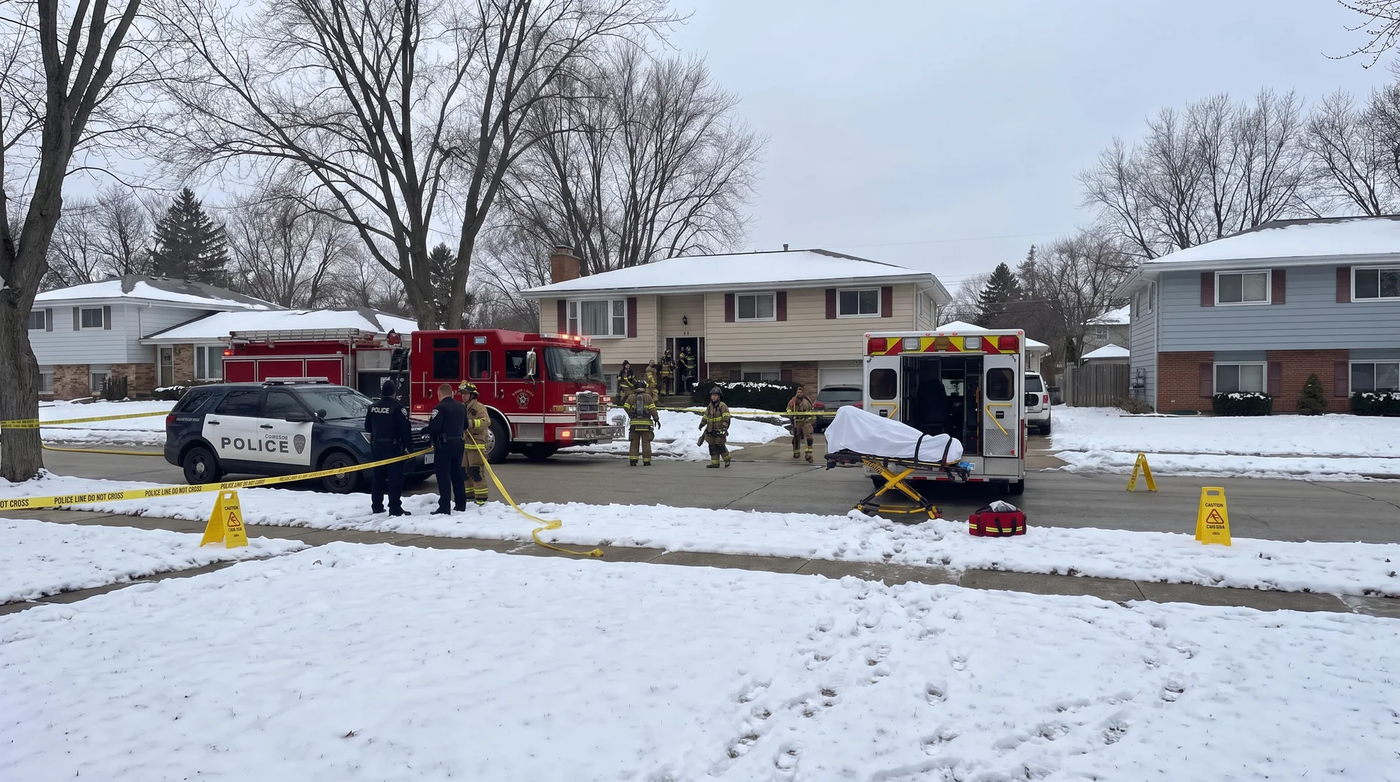
I've been a firefighter for 11 years. In that time, I've walked into burning homes, pulled people from wrecked cars and responded to more medical emergencies than I could ever remember individually.
But some calls stay with you.
Last January, we got a welfare call around 2 PM after neighbors realized the family next door hadn't been seen in two days. Their car hadn't moved, and nobody was answering the door.
Five people lived there: a mom, a dad and three children — 6, 4 and 2.
We made entry and started clearing the house.
All five were still in their beds.
They looked asleep.
They weren't.
The furnace had developed a crack in the heat exchanger, allowing carbon monoxide to leak into the home every time the heat came on. There was no smoke, no smell and nothing the family could have seen or heard that would have told them poison was filling the air around them.
They never knew they were breathing it.
Then I saw the detector mounted on the hallway wall.
Its green light was still glowing.
It never went off.
The Green Light Was Still On
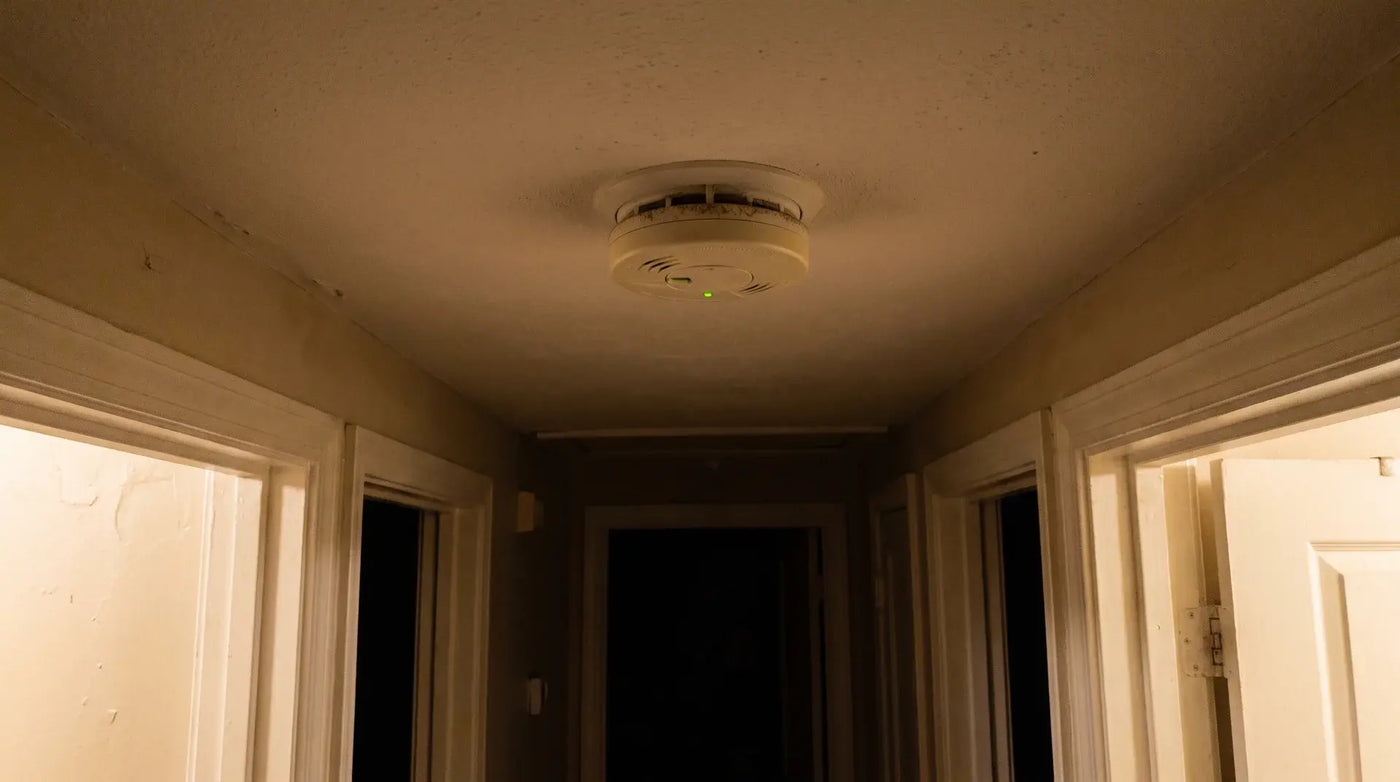
The detector didn't have a dead battery. It wasn't chirping, flashing an error or showing any obvious sign that something was wrong.
It had power.
If the father walked past it before bed that night, he would have seen what millions of homeowners see when they check the detector on their wall: a green light and a quiet house.
He had done what he was supposed to do. He had bought a carbon monoxide detector, put it on the wall and trusted it to warn his family if the air became dangerous.
Nothing told him to wake his wife or grab the kids.
So he went to bed.
The alarm never sounded.
All five — dead.
Five days later, we got another carbon monoxide call.
This time, the family was already outside.
Five Days Later, Another Family Walked Out Alive
There were four people in the second home: a mother, a father, their 3-year-old child and an 11-month-old baby. This time, the carbon monoxide was coming from a faulty water heater.
At around 4 AM, both parents woke up feeling sick, dizzy and with pounding headaches.
Then the alarm started screaming.
They grabbed both kids and ran outside.
When we arrived, the parents were standing on the lawn in their pajamas, shaken and still feeling the effects of what they had been breathing.
But they were holding their children.
Alive.
Five days earlier, I had walked into a house where three children never made it out of their beds. Now I was watching another father hold his baby on the front lawn.
Both homes had carbon monoxide.
Both homes had detectors.
One alarm stayed silent.
The other gave a family time to run.
I wanted to understand why.
The Line On The Box I'd Never Questioned
When I got home, I started reading about the standards behind the detectors we put on our walls.
That's when I found UL 2034.
If you own a standard residential carbon monoxide detector, you may have seen those words printed on the box or on the back of the unit: “Complies with UL 2034.”
For years, I would have read that line and assumed it meant the detector would warn me as soon as carbon monoxide became a concern.
That isn't what the standard says.
UL 2034 sets specific carbon monoxide concentrations and time windows in which a residential alarm must respond.
It does not require the detector to sound the moment carbon monoxide first appears in the room, which means a compliant detector can remain silent at lower concentrations even while exposure is occurring.
At 70 parts per million, the required alarm window can range from 60 to 240 minutes.
Up to four hours.
What UL 2034 actually requires
Permitted response window before a compliant residential alarm must sound
Source: UL 2034, Standard for Single and Multiple Station Carbon Monoxide Alarms.
I read that line twice.
Because it meant a detector could have power, pass its test and remain completely silent while carbon monoxide was present in the home.
Not because it was dead.
Not necessarily because it was broken.
Because it had not yet reached the conditions that required the alarm to sound.
At 70 PPM, The Alarm Window Can Run Up To Four Hours
That changed the way I understood the detector in the first house.
Until then, I had thought there were two possibilities: either the detector worked, or it didn't. What I hadn't seriously considered was that it could be functioning according to its design while still giving the family very little information about what was happening in the air before the alarm threshold was reached.
That distinction matters because homeowners don't usually see a green light and think, the unit has power.
They think:
The air is safe.
But a green light does not tell you the room is at 0 PPM. It does not tell you carbon monoxide isn't present, and it does not tell you whether the concentration has started climbing while your family is asleep.
Without a display, you cannot see that information.
The detector can look exactly the same to you whether the air is clear or whether carbon monoxide has started appearing.
The light stays green.
The house stays quiet.
Then I Saw The Same Green Light Outside My Kids' Rooms
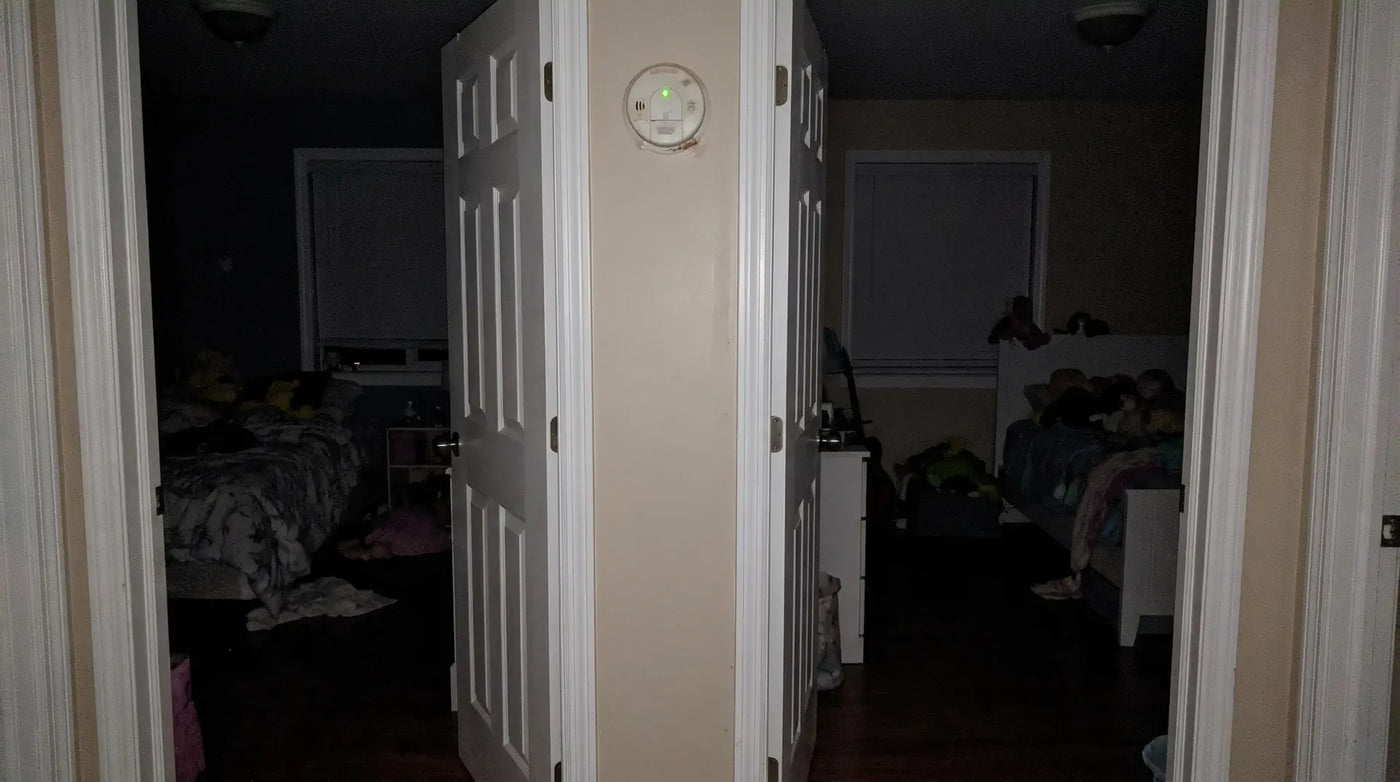
After reading the standard, I walked through my own house and looked at the detectors I had trusted for years. One was near our bedrooms and another was downstairs.
Every one had the same green light.
My wife was asleep. My kids were behind their bedroom doors. The furnace was running like it did every winter night.
For years, I had walked past those detectors and assumed that silence meant there was nothing in the air.
Now I knew silence didn't necessarily tell me that.
I thought about the father from the first house. He bought the detector, put it on the wall, saw the green light and went to sleep believing his family was protected.
I had been doing the exact same thing.
And I'm a firefighter.
Then I Remembered Something Different In The Second House
After we got the second family outside, we went back in to shut down the water heater and ventilate the home. That was when I got a closer look at their detector.
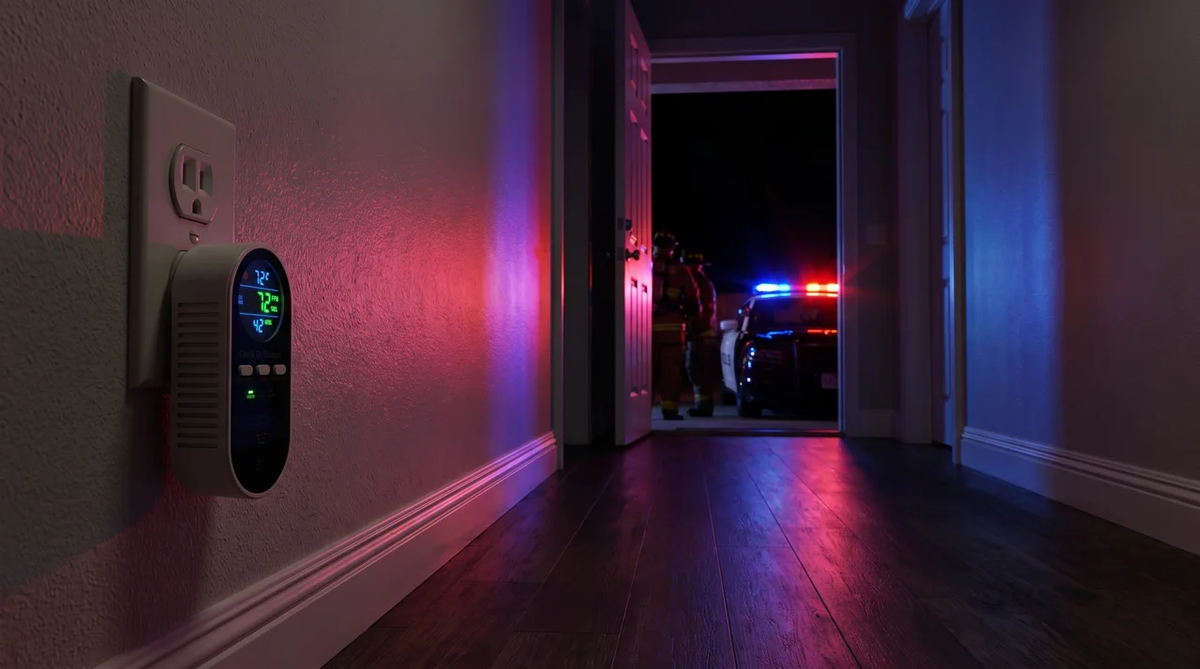
It had a screen.
Not just a status light.
An actual number.
The alarm was what woke that family and got them outside. But the display was the detail I kept thinking about afterward, because it gave the homeowner something my detectors at home never gave me: a way to see what the sensor was actually reading.
Before we left, I checked the label on the back and wrote down the model information.
When I got home, I looked it up.
Sentivo.
The Number On The Screen Changed What I Used At Home
What caught my attention about Sentivo wasn't some complicated feature.
It was the number.
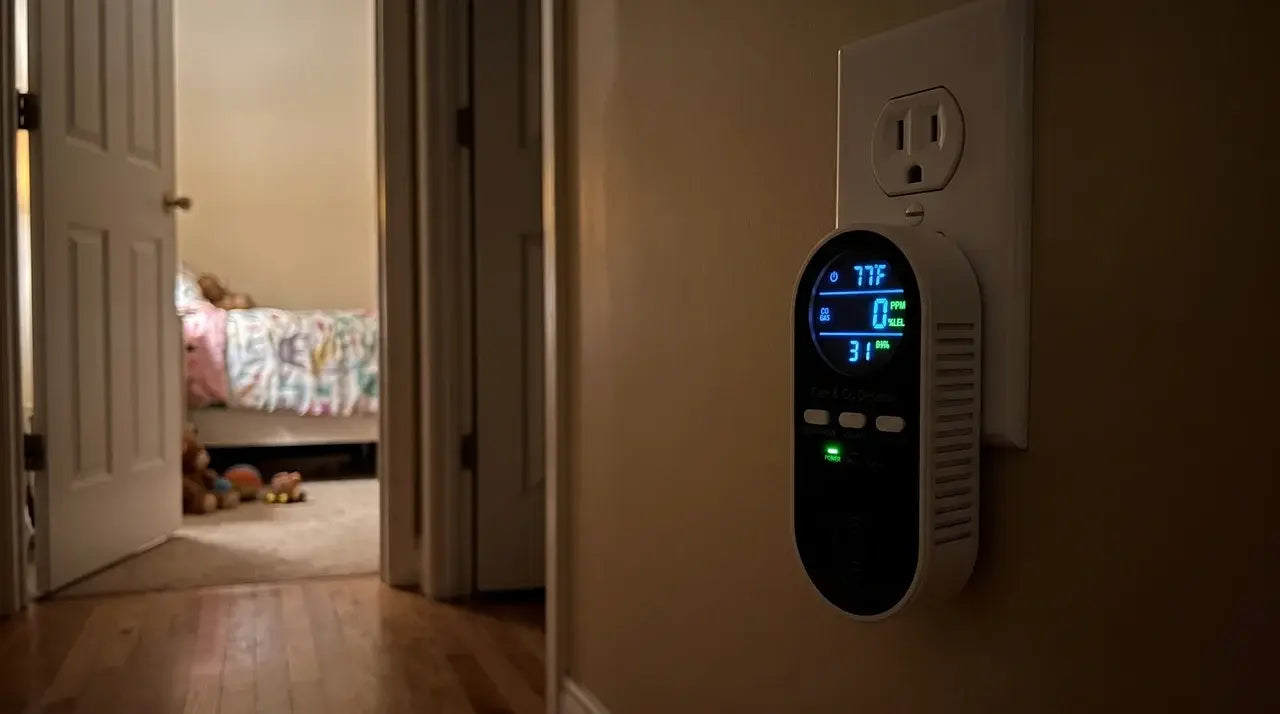
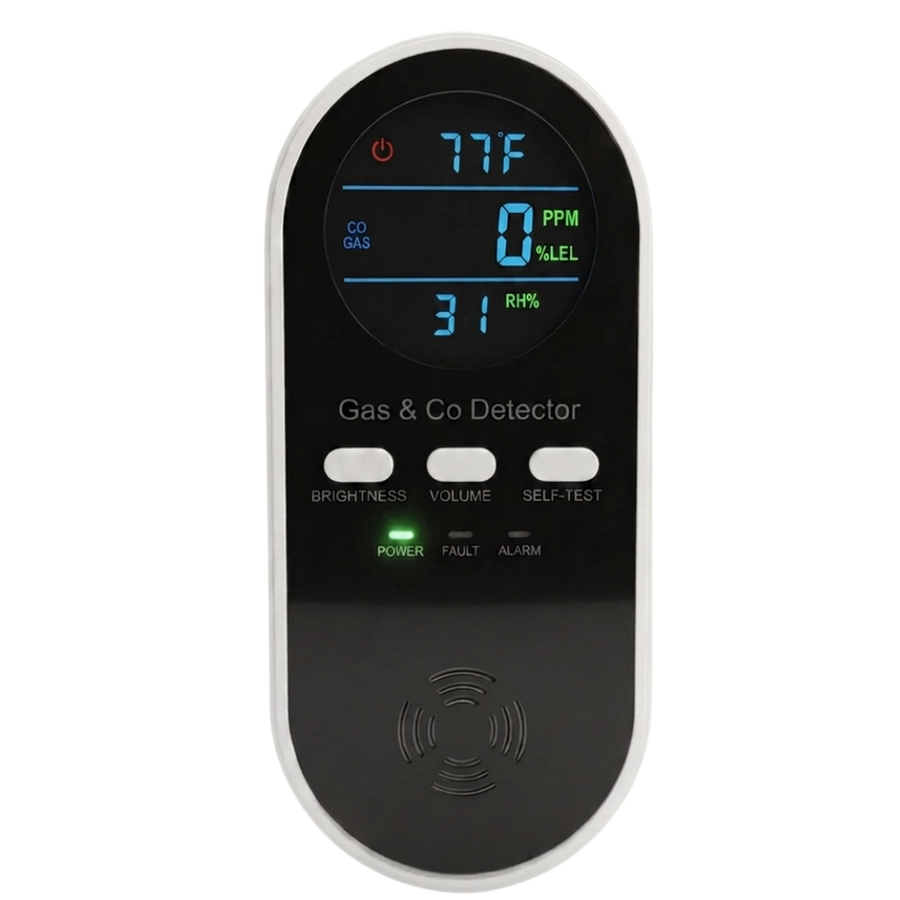
Sentivo shows the carbon monoxide reading directly on a digital display, which means I don't have to look at a green light and assume the room is clear. I can look at the detector and see what its sensor is reading at that moment.
If the air is clear, I can see that.
If the reading changes, I can see that too.
That gave me the piece of information I realized my old detectors were missing.
Visibility.
My old detector told me it had power.
Sentivo showed me what it was reading.
A green light asks you to trust. A number lets you check.
By Sunday, Every Green Light In My House Was Gone
I ordered four Sentivos that weekend: one for the kitchen, one for the hallway, one for the basement and one for my kids' room.
I wasn't expecting carbon monoxide to suddenly fill my house the night I plugged them in. I simply didn't want the same blind spot anymore.
For the first few nights, I found myself checking the display every time I walked past. Most of the time, there was nothing interesting to see.
That was exactly what I wanted.
A normal reading. A quiet house. My kids asleep.
The difference was that I wasn't using a powered green light as proof that the air was clear anymore.
I could see the reading for myself.
The Detector Was Working. That Was The Problem.
A standard carbon monoxide detector is not necessarily defective because it remains silent at a lower concentration.
That isn't the point.
The problem is the gap between what the detector is designed to tell the homeowner and what the homeowner believes it is telling them.
When most people see a green light and hear no alarm, they naturally interpret that as:
There is no carbon monoxide here.
But what the detector may actually be telling them is that it has power and the conditions requiring an alarm have not yet been reached.
Those are very different statements.
Until I read the standard myself, I didn't understand how different.
That is why the detector from the first house stays in my head.
It looked normal. The light was green. The alarm was silent.
Five people were dead.
The Most Dangerous Part Is How Normal Everything Looks
Carbon monoxide emergencies rarely begin with a dramatic moment.
The furnace turns on. The water heater runs. Someone finishes dinner, the kids go to bed, the lights go off and the house gets quiet.
If carbon monoxide starts entering the home, nothing about the room may look or smell different.
You cannot see it. You cannot smell it.
And symptoms such as headaches, nausea, dizziness and fatigue are easy to mistake for something else, especially during winter.
That is why the detector matters so much. It is the one device inside the home specifically designed to sense something your own body cannot reliably detect.
After those two calls, I decided I wanted mine to show me what it was seeing.
I Still Think About What That Father Saw Before Bed
He didn't knowingly leave his family unprotected.
He had a detector. He trusted it.
I imagine him walking through the hallway before bed, seeing the green light on the wall and having no reason to think anything was wrong.
So he went to sleep.
Five days later, I watched another father standing outside holding his children after an alarm gave him time to get them out.
One family never heard a warning.
The other did.
That comparison changed what I use in my own home.
Go Look At What's On Your Wall Tonight
Don't only press the test button.
Look at what your detector actually tells you.
If all you see is a green light, understand what that light means and then ask yourself a second question:
Can I see what is actually in the air?
If you can't, I would replace it with something that shows the real PPM reading.
You don't have to buy the exact detector I did. But after those two calls, I will never again use a green light as my only information.
The one I use is Sentivo.
Maybe I'll look at those screens for the next ten years and see nothing but zero.
I hope I do.
But I'd rather see that zero myself…
than trust a green light and learn too late what it never told me.
The Detector I Put In My Own Home
“Sentivo gives me something my old detectors never did: a real-time carbon monoxide reading I can see for myself. I don’t have to guess what the green light means anymore. I can look at the number.”
— Dan Williams, Firefighter
See the Sentivo Dan uses →