7 Myths You Believe About Carbon Monoxide That Are Putting Your Family in Danger

1.“If the alarm is silent, I’m fine.”
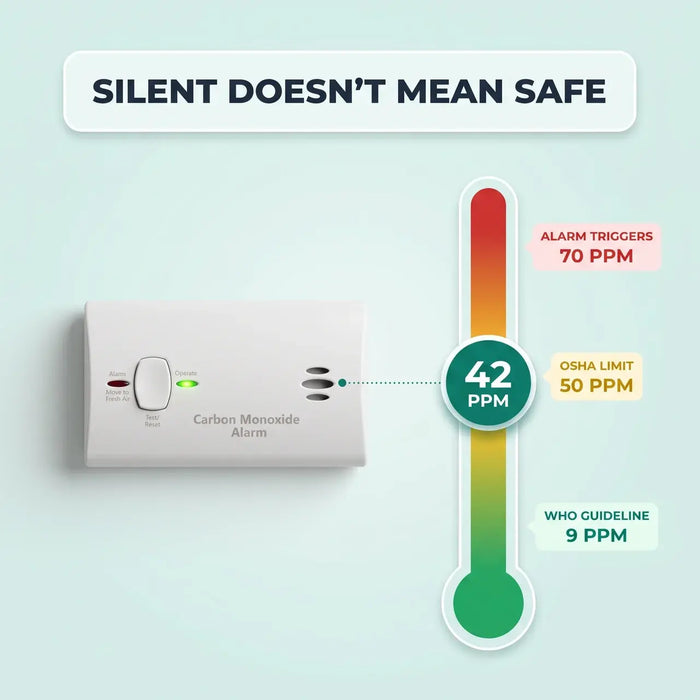
U.S. CO alarms are built to a standard called UL 2034. It’s designed to avoid alarming.
At 70 PPM your detector is allowed to wait up to 4 hours before sounding. Below 70 PPM, it can stay silent forever.
You can sit at 50 PPM for weeks. Chronic headaches. Brain fog. Fatigue. Real danger for kids and pregnant women. And your fully-functional alarm will not make a single sound.
It’s not broken. It’s working exactly as designed.
2.“If it got bad, I’d wake up and get us out.”
It’s the thought that lets you fall asleep: if something were wrong, you’d feel it and move.
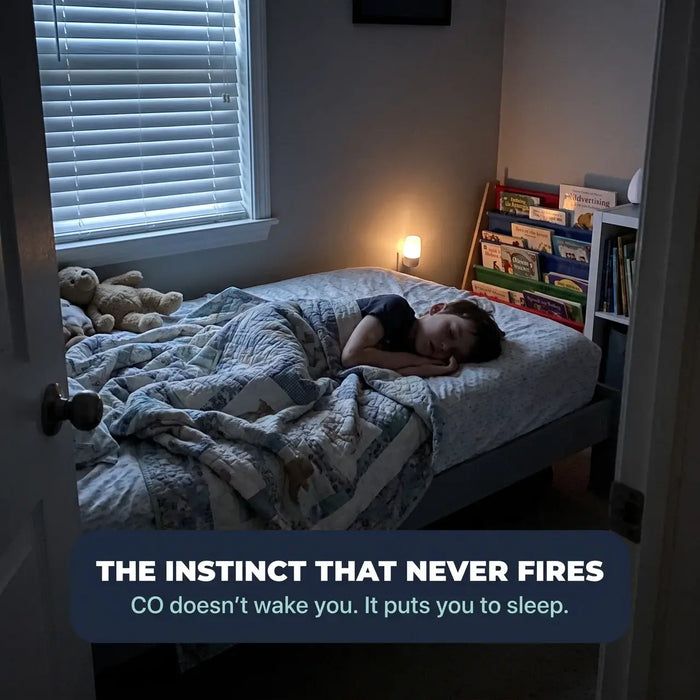
CO is built to defeat that instinct. It doesn’t jolt you awake — it makes you drowsy, then foggy, then pulls you into a sleep you don’t come back from.
Small bodies go under faster. A sleeping child won’t wake to warn you — and you won’t wake to reach them.
The one instinct you’re counting on is the first thing it takes.

3.“It won’t happen to us.”
This is the one every family believes — right up until it doesn’t. Each year CO sends over 100,000 Americans to the ER, hospitalizes 14,000+, and kills more than 400. None thought it would be them.
It doesn’t pick reckless people. A furnace with a hairline crack. A water heater venting wrong. A car left running in an attached garage. Nothing you’d notice. Nothing you did wrong.
4.“Ours works — I tested it.”
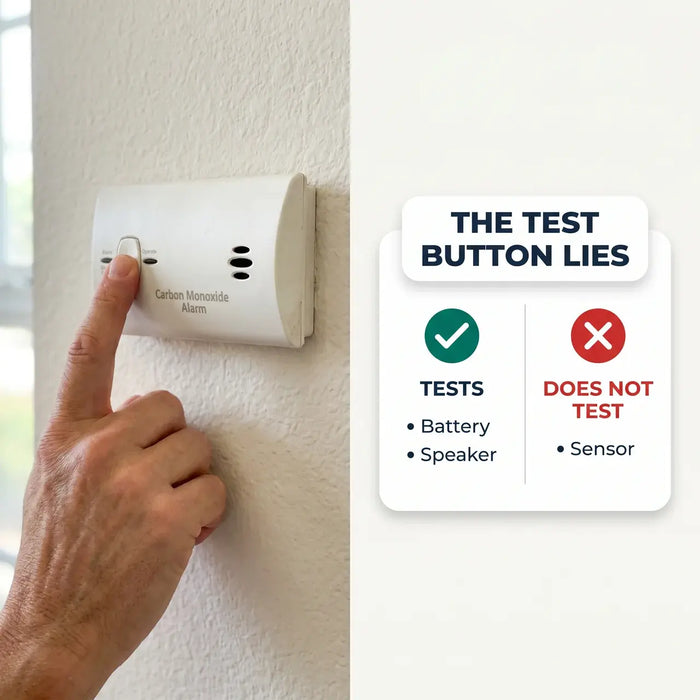
That test button doesn’t check what you think. It confirms the battery and the speaker. It does not test the sensor — the one part that actually detects gas.
When researchers pulled CO alarms from real homes and exposed them to dangerous levels, 2 in 5 (40%) failed to sound. Lights on, displays normal, chirping when tested — and blind to the gas in the room.

5.“CO is a winter thing — we’re past it.”
A single portable generator can put out as much CO as hundreds of idling cars. And the deadliest generator season isn’t winter — it’s summer, after storms knock the power out and families run them too close to the house.
Add the everyday ones that never take a season off: the car warming in an attached garage, the gas water heater, the pool heater, the grill pulled too close to an open window.
6.“Mount it high. Gas rises.”
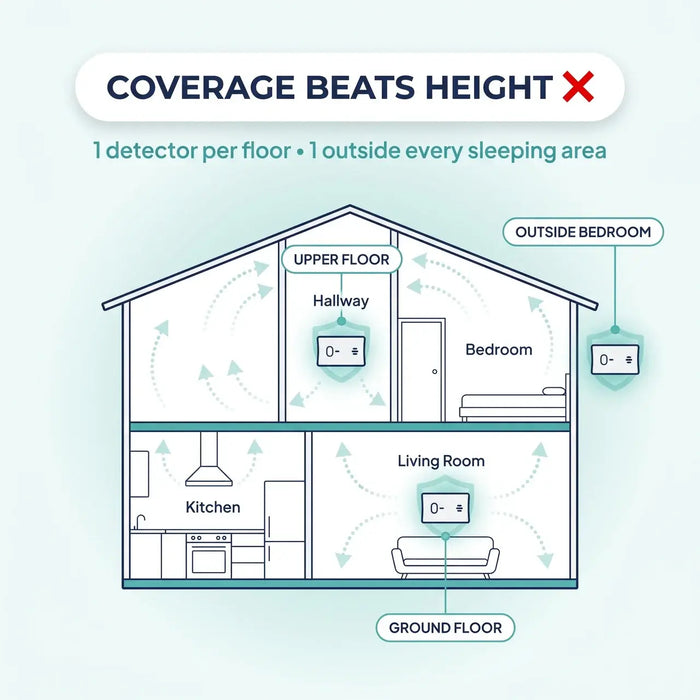
CO mixes evenly with air, top to bottom. The NFPA is explicit: mounting height doesn’t matter much.
What matters is coverage. The rule that actually saves lives: one detector on every floor, one outside every sleeping area.
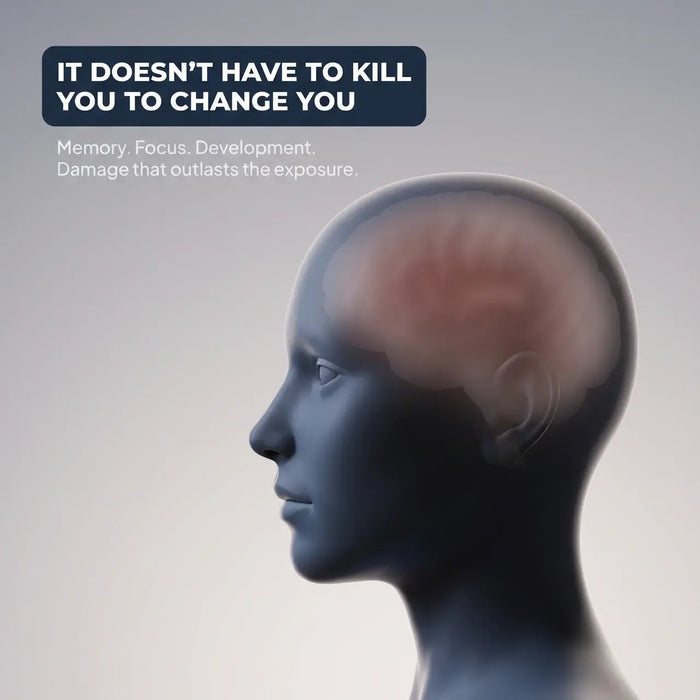
7.“As long as it’s not enough to kill you, there’s no real harm.”
This is the assumption underneath all the others — that CO either kills you or it doesn’t, and anything short of that you just walk off.
You don’t. CO starves the brain and heart of oxygen, and the damage can be permanent — memory loss, movement problems, lasting cognitive decline. Worse: it can surface weeks later, once no one’s connecting it to the air anymore. Doctors have a name for it because it happens so often.
Stop waiting to be alarmed. Start being able to see.
Every myth here comes down to one thing: a normal alarm stays silent until CO is already dangerous — and your body goes quiet even sooner. By the time anything warns you, your family’s already been breathing it.
The only way out is to stop waiting for a scream and start seeing the number — from zero, while everyone’s still fine.
That’s what Sentivo Detector™ does.
- Live CO from 0 PPM — see the slow creep weeks before any alarm would sound
- Gas + propane too — three threats, one screen
- 30-second setup — plugs into any outlet, no wiring, no dead batteries
- Cheap enough for every room — cover every floor and bedroom, not just the kitchen
Try it risk-free for 100 nights. Don’t sleep easier? Send it back — full refund, we cover shipping. The only thing you can’t get back is the night you needed it and didn’t have one.